2026 Top Trends in New Energy Vehicles for a Sustainable Future?
As we approach 2026, the world is witnessing rapid changes in the automotive industry. New Energy Vehicles (NEVs) are becoming more prominent. These vehicles promise reduced emissions and a cleaner environment. Manufacturers are innovating in battery technology, leading to longer ranges and faster charging times. Many cities are investing in charging infrastructure, making it easier for consumers to adopt NEVs.
However, challenges remain. The production of batteries still relies on rare materials, which raises environmental concerns. Public awareness about NEVs and their benefits is still not widespread. Consumers often question the total cost of ownership, including maintenance and charging. There’s a need for more transparency in how these vehicles are built.
The trends of 2026 will highlight exciting advancements. We can expect smarter, more efficient vehicles on our roads. But these advancements require a balanced approach. It's crucial to address the environmental impact of NEV production. The path to a sustainable future with New Energy Vehicles demands collective effort and innovation. The journey has just begun, and reflection on these issues will be essential.
Future Innovations in Battery Technology for New Energy Vehicles
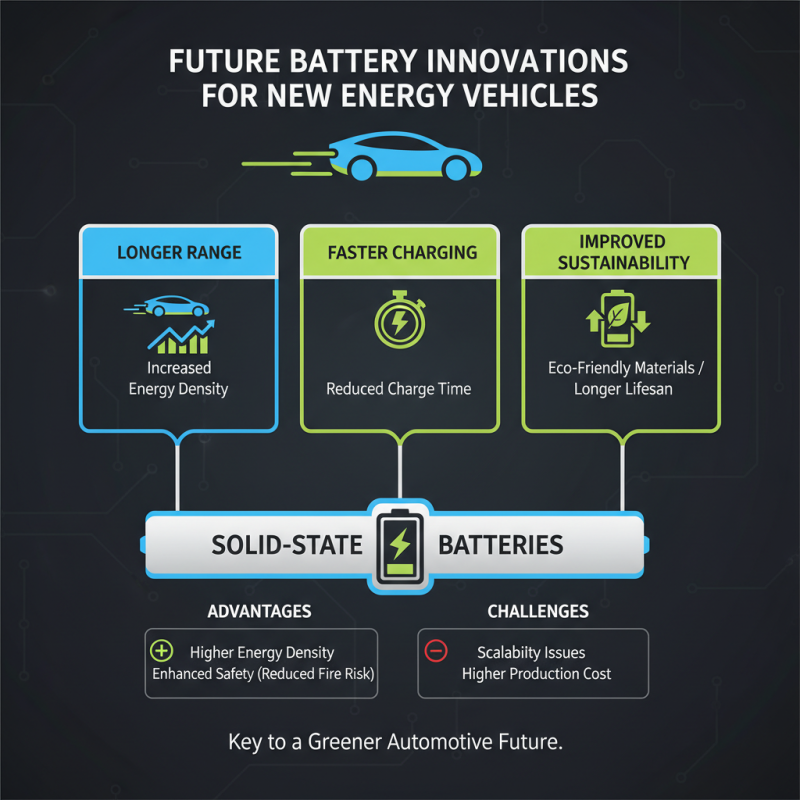
The future of battery technology is a critical aspect of new energy vehicles. Innovations are paving the way for longer range, shorter charging times, and improved sustainability. Solid-state batteries are gaining attention. They offer higher energy density and reduce the risk of fire. However, scalability and cost remain challenges.
Recycling old batteries is another key point. As electric vehicles become more popular, the demand for raw materials increases. Effective recycling processes need development. This could help reduce waste and lower material costs. Companies are exploring second-life applications for batteries too.
Despite the advancements, obstacles persist. Current energy density still limits vehicle range. Charging infrastructure is still lagging. Many people worry about battery lifespan. Addressing these issues requires ongoing research and collaboration. The journey towards a sustainable future in new energy vehicles is filled with both promise and challenges.
The Rise of Hydrogen Fuel Cell Vehicles in Sustainable Transportation
The world of transportation is evolving, and hydrogen fuel cell vehicles are gaining traction. These vehicles use hydrogen to generate electricity, producing only water as a byproduct. This technology offers a cleaner alternative to traditional gasoline engines. They can refuel quickly, resembling the convenience of conventional fueling stations.
However, challenges remain. The infrastructure for hydrogen refueling is limited in many regions. There’s a need for more stations to support widespread adoption. Furthermore, the production of hydrogen itself can be energy-intensive. Many methods rely on fossil fuels, which raises questions about true sustainability.
Innovative solutions are needed to address these issues. Can we harness renewable sources to create hydrogen? What are the safety implications of widespread hydrogen use? Each advancement brings new questions. By exploring these details, the potential of hydrogen fuel cell vehicles shines brighter, paving the way for sustainable travel.
Integration of Autonomous Driving in New Energy Vehicle Systems
The future of new energy vehicles (NEVs) is closely tied to the integration of autonomous driving technology. These innovations promise a radical shift in how we perceive transportation. Imagine a world where your vehicle could navigate through city streets, avoiding obstacles and traffic. The relief it brings can be immense. However, challenges remain.
Autonomous NEVs depend on advanced sensors and AI algorithms. The technology aims to enhance safety and reduce human error. Still, concerns about reliability linger. For example, what happens when systems fail? Is society ready for fully autonomous travel? It raises questions about liability and accountability. Unexpected situations can lead to accidents or malfunctions that disrupt the flow of everyday life.
Public perception plays a crucial role in embracing this shift. Many people are hesitant about trusting machines to drive for them. Educating the masses becomes vital. There must be transparent discussions about how these systems operate. Addressing ethical concerns is equally important. The path to a sustainable future with autonomous NEVs requires ongoing dialogue and improvements. The journey is lengthy, but the potential benefits are vast.
2026 Top Trends in New Energy Vehicles for a Sustainable Future - Integration of Autonomous Driving in New Energy Vehicle Systems
| Trend |
Description |
Impact on Sustainability |
Expected Adoption Rate by 2026 |
| Integration of AI Algorithms |
Advanced AI techniques in EVs for improved navigation and efficiency. |
Reduces energy consumption and emissions. |
75% |
| Vehicle-to-Grid Technology |
Allows EVs to return energy to the grid, enhancing renewable energy use. |
Supports grid stability and reduces reliance on fossil fuels. |
60% |
| Smart Charging Stations |
Innovative charging solutions that optimize energy use based on grid demand. |
Maximizes the use of renewable energy sources. |
80% |
| Enhanced Battery Technologies |
Development of solid-state batteries for longer range and quicker charging. |
Lowers environmental impact from battery production and disposal. |
70% |
| Connected Vehicle Systems |
Real-time data sharing between vehicles for improved traffic management. |
Reduces congestion and lowers emissions from vehicle idling. |
65% |
Impact of Government Policies on the Growth of New Energy Vehicles
Government policies play a crucial role in the growth of new energy vehicles.
Subsidies for electric vehicle purchases encourage consumers to switch from traditional cars.
Tax incentives reduce the initial cost, making these vehicles more appealing.
However, the effectiveness of these policies often varies by region. Some areas lack sufficient charging infrastructure.
This gap can discourage potential buyers.
Many governments have set ambitious targets for reducing emissions. Yet, policies can sometimes focus too much on short-term goals.
This may lead to inadequate support for long-term investments in technology and infrastructure.
Regulation changes can also create uncertainty for manufacturers. They sometimes struggle to adapt, impacting their growth strategy.
Moreover, not all policies are created equal. Some might prioritize certain technologies over others, leaving
less room for innovation. This can stifle alternative solutions that could drive sustainability further.
It's essential to reflect on the balance between immediate results and long-term vision in policy-making.
In the end, effective collaboration between governments, manufacturers, and consumers is vital for a truly sustainable future in new energy vehicles.
Consumer Trends Driving Demand for Eco-friendly Automobiles
As consumers become increasingly aware of environmental issues, their preferences are shifting. Many choose eco-friendly automobiles over traditional vehicles. This change is not just a trend; it's a lifestyle commitment. The desire for sustainable transport reflects a deeper understanding of climate change.
Electric vehicles and hybrids are gaining traction. They promise lower emissions and reduced reliance on fossil fuels. However, the charging infrastructure still needs improvement. In urban areas, charging stations are often busy or poorly placed. In rural zones, access can be limited. Consumers feel frustrated when trying to find convenient locations. This gap highlights critical areas for development.
Battery life and efficiency are also concerns. Many consumers want longer ranges without frequent charging. Current technology struggles to meet these expectations. Innovations are necessary but often take time. There's also a need to consider how eco-friendly materials are sourced. Not all production methods are sustainable. Consumers need to keep asking questions to drive change. Balancing desires with real-world limitations remains a challenge.