How to Choose the Best Charging Piles for Electric Vehicles?
Choosing the best charging piles for electric vehicles is crucial for both consumers and businesses. According to Dr. Emily Carter, a leading expert in electric vehicle infrastructure, "The right charging piles can significantly improve user experience and operational efficiency." This statement highlights the importance of selecting appropriate charging solutions.
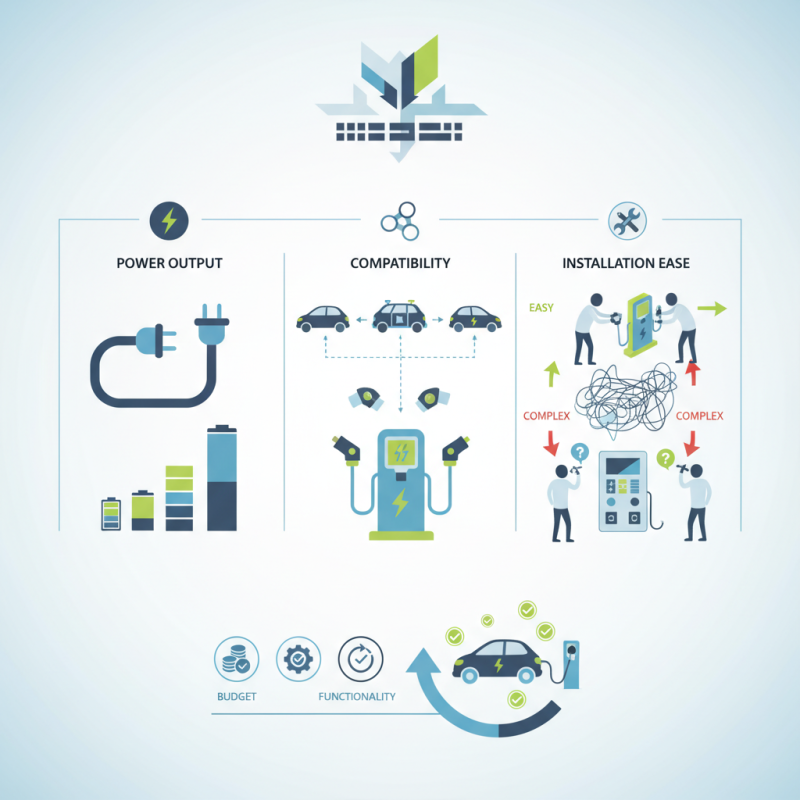
When evaluating charging piles, several factors come into play. Consider power output, compatibility, and installation ease. Some charging piles may have limited availability or complex installation requirements. Users often overlook these details, only to face challenges later. It's essential to prioritize reliability and accessibility, ensuring that the chosen solution meets specific needs.
While the market offers numerous options, not all charging piles will suit every situation. Budget constraints can also impact the decision-making process. Reflecting on personal needs and long-term goals can guide better choices. Balancing cost, functionality, and convenience is key to making an informed decision.
Factors to Consider When Selecting Charging Piles for EVs
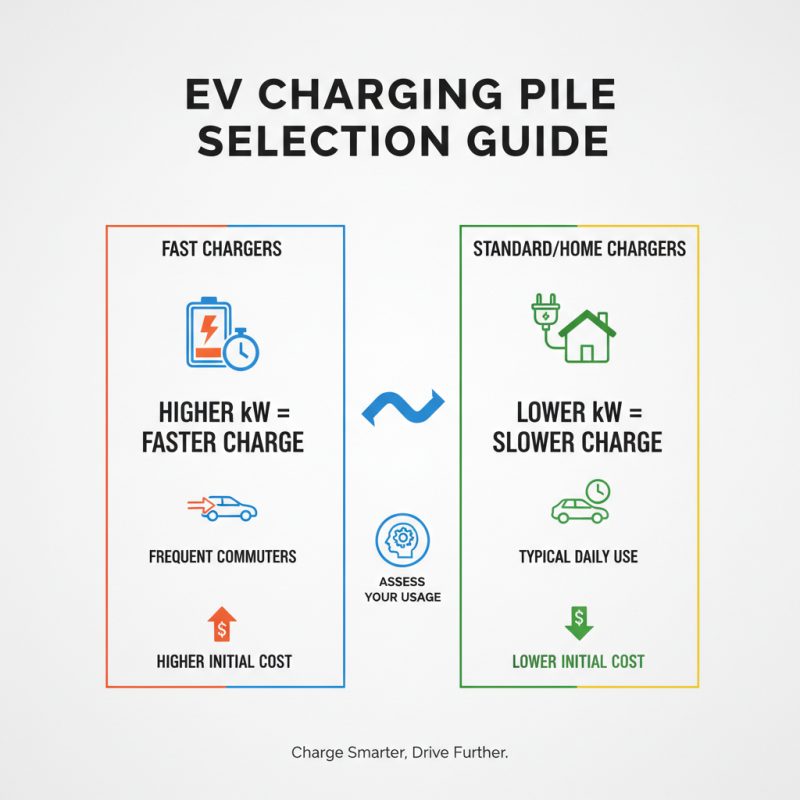
When selecting charging piles for electric vehicles, consider the power output. Higher kilowatt ratings mean faster charging times. If you commute frequently, opt for fast chargers that can quickly replenish your battery. However, they may cost more initially. Assess your typical usage.
Another critical factor is the installation location. Urban areas may require compact models due to space constraints. In contrast, rural setups might accommodate larger units. Evaluate the availability of power sources. Some locations may have limitations, requiring adjustments to your choice.
Keep future-proofing in mind. As technology advances, compatibility with new models becomes essential. Choose charging piles that can adapt to potential upgrades. However, overestimating your long-term needs might waste resources on unnecessary features. Make informed decisions based on current and anticipated requirements.
Types of Charging Piles Available for Electric Vehicles
When selecting charging piles for electric vehicles, understanding the types available is crucial. There are several categories, but the most common ones are Level 1, Level 2, and DC Fast Charging.
Level 1 chargers use a standard household outlet. They are slow and take a long time to charge a vehicle. This option is best for home use, but it might not suffice for those with heavy daily driving needs.
Level 2 chargers are more powerful, allowing for quicker charging. They are widely used in public charging stations and businesses. This type can significantly reduce charging time, but requires installation of a dedicated circuit. On the other hand,
DC Fast Charging is the fastest option. These chargers deliver high power and can charge a battery to 80% in under an hour. However, they are less common and often located along highways.
Choosing the right type of charging pile depends on your usage. Do you often drive longer distances? If so, you might need faster options. Consider also the location of charging stations in your area. If they’re limited, a more powerful charging solution might be necessary, but installation can be costly. Reflecting on your daily routine helps in making an informed decision.
Assessing Charging Speed and Compatibility with Various EV Models
When choosing charging piles for electric vehicles, speed and compatibility play crucial roles. Different models have varying battery capacities and charging requirements. Some vehicles may only support Level 2 charging, while others can utilize DC fast charging. It’s essential to understand your vehicle’s specifications. Otherwise, you may invest in a charger that does not meet your needs.
Charging speed is often expressed in kW. Higher kW ratings generally mean faster charging. However, not all vehicles can handle high-speed input. A vehicle might charge quickly at a station but take longer at a lower-powered charger. Additionally, not all charging piles work with every car model. For instance, some chargers may not be compatible with specific connectors or protocols. You may think you're choosing wisely, only to find your EV doesn't connect. Such scenarios can lead to frustration and wasted time.
In your quest for the best charging options, consider future compatibility too. The EV market evolves rapidly, and new models may require different standards. Researching evolving technologies is vital. Reflecting on your choices is key. What worked yesterday may not suit tomorrow's advancements. Balancing speed, compatibility, and adaptability will ensure you choose wisely.
Understanding Installation Requirements for Charging Piles
When considering installation requirements for charging piles, the location is key. Identify whether the charging station will be placed in a residential area or a commercial setting. Each environment comes with unique considerations. Residential installations often involve securing permits from local authorities. Commercial setups may require assessments of electrical capacity and parking configurations.
Space is another vital factor. Charging piles need to be easily accessible for users. This means considering the distance to power sources. Ensure there is adequate room for vehicles to park and maneuver. Misjudgments here can cause significant headaches later.
Moreover, electrical infrastructure must be up to code. Existing wiring may not support the additional load from charging piles. Upgrades might be necessary, which can increase costs and extend installation timelines. Some areas may have stringent regulations that could complicate the process further. Always consult with professionals to assess these needs properly. Rushing through this stage can lead to costly mistakes.
Evaluating Cost and Maintenance of Electric Vehicle Charging Solutions
When evaluating the cost of electric vehicle (EV) charging solutions, several factors come into play. A recent report from the International Energy Agency (IEA) indicates that installing a Level 2 home charger can cost between $500 and $2,000. This price varies based on installation complexity and local regulations. Moreover, the average electricity cost per kWh varies across regions. Thus, long-term operational costs fluctuate significantly.
Maintenance is another critical element. Charging stations generally require less upkeep than gas stations. Yet, they are not maintenance-free. According to the National Renewable Energy Laboratory, routine checks and software updates are essential every six months. These can result in extra costs that users may overlook. Furthermore, users should consider wear and tear. Over time, connectors may degrade, leading to potentially costly replacements.
Additionally, the availability of public charging stations impacts overall expenses. Urban centers tend to offer more options, but they come with higher service fees. A report from the U.S. Department of Energy suggests that about 70% of public charging stations use a pay-per-use model. It introduces a variable cost that users often underestimate. Understanding these factors can help users make informed decisions about their EV charging solutions.
How to Choose the Best Charging Piles for Electric Vehicles? - Evaluating Cost and Maintenance of Electric Vehicle Charging Solutions
| Charging Solution Type |
Cost (Installation) |
Cost (Per Charge) |
Maintenance Frequency |
Average Lifespan |
| Level 1 Charger |
$300 - $600 |
$0.10 - $0.30 |
Annually |
10 - 20 years |
| Level 2 Charger |
$500 - $1,500 |
$0.15 - $0.40 |
Bi-Annually |
10 - 15 years |
| DC Fast Charger |
$10,000 - $40,000 |
$0.25 - $0.70 |
Quarterly |
5 - 10 years |
| Solar Charging Station |
$3,000 - $15,000 |
$0.05 - $0.20 |
Annually |
15 - 25 years |