Electric Car Battery Charging Piles What You Need to Know?
Electric Car Battery Charging Piles are pivotal in the transition to sustainable transportation. Experts like Dr. Linda Meyer, a prominent figure in electric mobility, emphasize the importance of accessibility in this field. She states, “The future of electric vehicles relies heavily on efficient charging infrastructure.”
As more consumers adopt electric vehicles, the demand for reliable charging piles grows. However, challenges remain. Many locations still lack sufficient charging stations. Users often face long wait times or malfunctioning units. These issues need addressing to enhance the overall experience.
Additionally, installation of these charging piles varies greatly by region. Some areas have abundant resources while others struggle. This inconsistency can lead to frustration among electric vehicle owners. It's crucial to evaluate and improve current systems. Addressing these concerns will pave the way for a smoother transition to electric mobility.
Understanding Electric Car Battery Charging Piles: An Overview
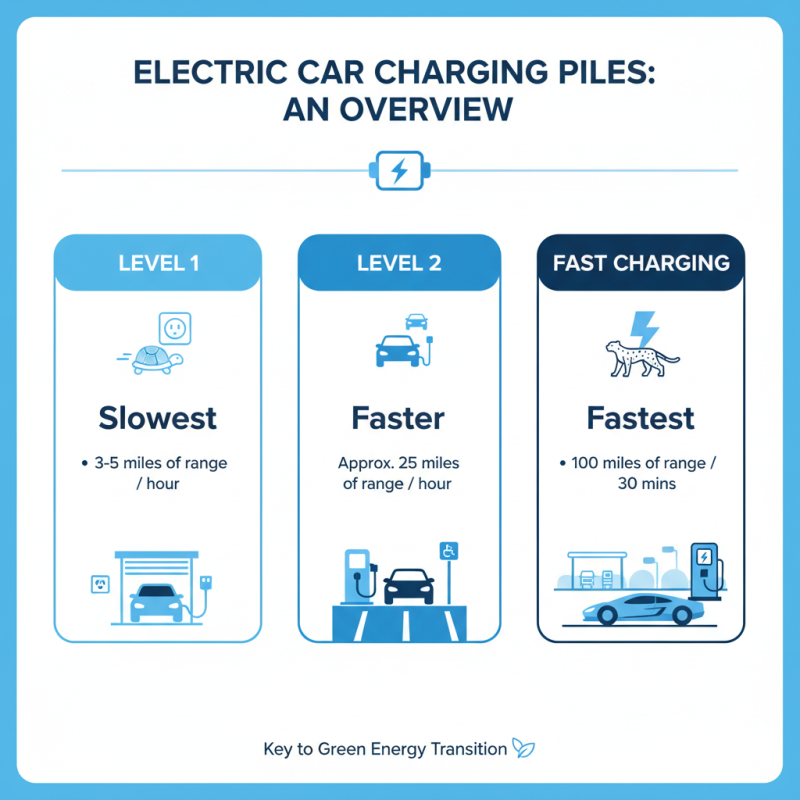
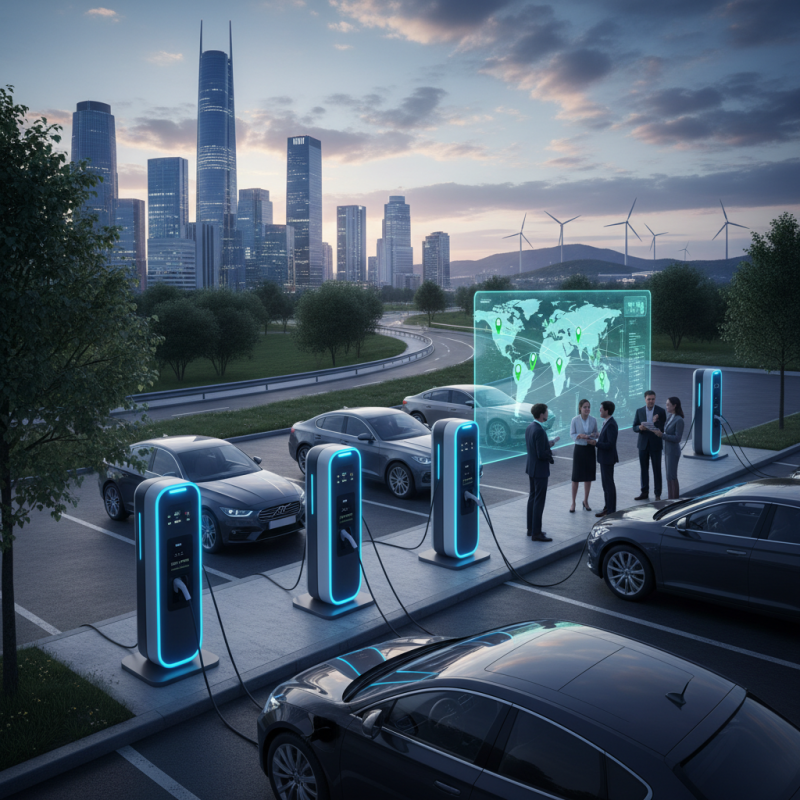
Electric car battery charging piles are crucial in the transition to green energy. These charging stations vary widely in type and functionality. Level 1 chargers are the slowest, typically providing 3 to 5 miles of range per hour. In contrast, Level 2 chargers offer around 25 miles of range per hour. Fast chargers can deliver 100 miles of range in just 30 minutes.
According to a report from the International Energy Agency, the global number of public charging points reached over 1.3 million in 2020. However, this figure still falls short in many regions. The accessibility and distribution of charging piles vary significantly. Urban areas may have many options, while rural locations often lack sufficient infrastructure. This disparity can discourage potential electric vehicle buyers.
While advancements are evident, challenges remain. Charging speed can differ based on temperature and equipment quality. Users often report their impatience with slow charging times. Maintenance of these charging piles is another concern. Faulty chargers can lead to frustration, impacting user experience. The overall efficiency of electric vehicle adoption hinges on addressing these issues.
Types of Electric Car Charging Stations: Level 1, Level 2, and DC Fast Charging
Electric car charging stations are crucial for EV adoption. Understanding the differences between them can help users choose the best option. There are three main types: Level 1, Level 2, and DC Fast Charging.
Level 1 charging uses a standard 120-volt outlet. It can take up to 20 hours to fully charge a typical EV. This method is best for overnight charging at home. However, it is slow and may not meet the needs of all drivers. According to industry data, about 58% of EV owners rely on home charging, often using Level 1.
Level 2 charging stations operate at 240 volts. They can charge an EV in about 4 to 8 hours. This makes them popular for public charging at workplaces or shopping centers. Many municipalities are installing these stations. Yet, coverage can be inconsistent. Data shows that only 20% of charging stations in the U.S. are Level 2. This can lead to frustration for drivers seeking a charging location.
DC Fast Charging is the fastest option. It can provide an 80% charge in just 30 minutes. Ideal for highway stops, it makes long-distance travel feasible. However, these stations are less common, and installation costs are high. Reports suggest that by 2025, 36% of charging stations will be DC Fast Chargers. This growth is essential but raises concerns about accessibility and infrastructure readiness.
Electric Car Battery Charging Piles: What You Need to Know?
| Charging Station Type |
Power Output |
Charging Time |
Best For |
| Level 1 |
120V, 12-16 amps |
8-20 hours (full charge) |
Home charging, overnight |
| Level 2 |
240V, 30-80 amps |
4-10 hours (full charge) |
Public charging stations, workplaces |
| DC Fast Charging |
480V, 100+ amps |
20-30 minutes (80% charge) |
Road trips, rapid refueling |
Charging Time and Efficiency: Key Factors Affecting Electric Vehicle Use
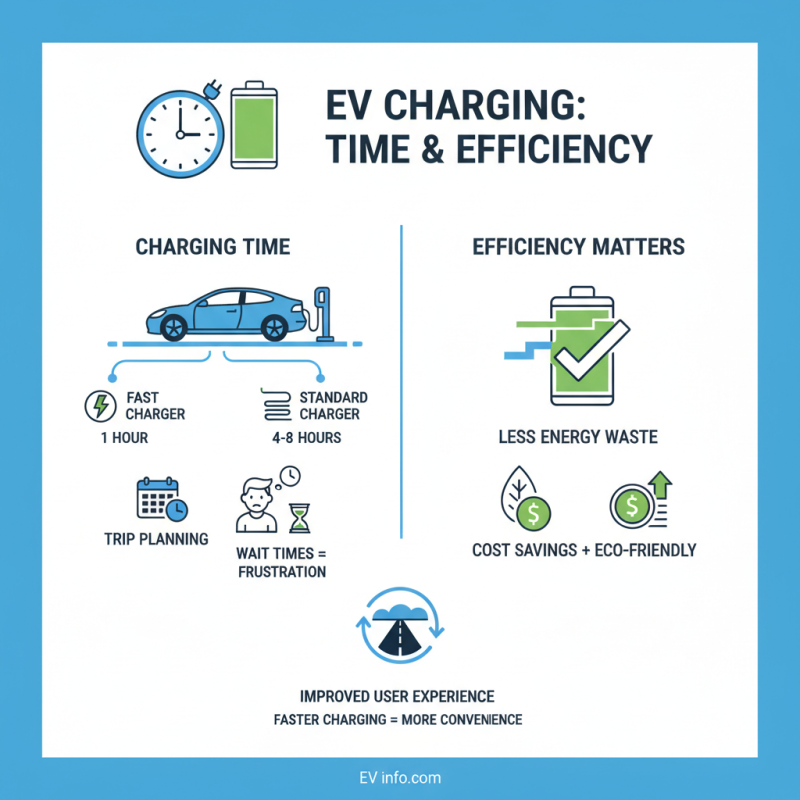
Charging time and efficiency are crucial for electric vehicle (EV) users. When you think of charging, consider how long it takes to complete a full charge. Fast chargers can recharge a battery in about an hour, while standard chargers may take several hours. Many users find this time-consuming. They often plan trips around charging stations. Sometimes, waiting can be frustrating, especially when you’re in a hurry.
Efficiency also plays a significant role. How quickly can your vehicle actually use the energy from the charger? Factors like battery size and charger power affect this. A larger battery generally holds more energy but takes longer to charge. Users often underestimate the impact of temperature on battery performance. Extreme heat or cold can reduce charging efficiency. This can lead to unexpected delays or lower range.
While many charging stations are available, not all are created equal. Some may be heavily used, leading to longer wait times. Users might arrive at a location, only to find it occupied. This situation can force a change in plans and create unnecessary stress. Improving infrastructure is essential, but challenges persist. Balancing speed with convenience is a continuing conversation in the EV community.
Infrastructure Growth and Future Trends in Electric Vehicle Charging Networks
As electric vehicles (EVs) gain popularity, charging infrastructure is rapidly expanding. Cities are installing more charging stations. However, the current network is often inconsistent. Some areas have plenty of charging points while others struggle. This discrepancy creates frustration for EV users. They need reliable access to charging to make ownership convenient.
Future trends indicate a shift towards smarter charging networks. These systems will enable remote monitoring and scheduling. Increased battery capacities may change the dynamics. Users might only need a few charging stations that are more efficient. Yet, this raises a question: will all areas be equally served? Equity in charging infrastructure remains a key concern. It’s essential to ensure that all communities benefit from EV growth.
Investment in renewable energy sources is also on the rise. Integrating solar and wind energy can power charging stations sustainably. This helps in reducing carbon footprints further. Yet, challenges like energy storage need to be addressed. How to balance demand and supply is complex. This future landscape will demand innovative solutions and continuous reflection on our current practices.
Safety Standards and Regulations for Electric Car Charging Stations
When considering electric car charging stations, safety standards are crucial. These stations must adhere to strict regulations to ensure user safety. According to the International Electrotechnical Commission (IEC), there are over 50 standards related to electric vehicle (EV) charging. These include guidelines for installation, operation, and maintenance.
Compliance with safety regulations can vary significantly. In some regions, enforcement may be lax, leading to potentially dangerous installations. For instance, a 2022 report indicated that nearly 30% of charging stations lacked adequate signage or safety features. Users should be vigilant when selecting charging sites. Basic safety features, such as proper grounding and emergency disconnects, are essential.
Moreover, data from the U.S. Department of Energy shows that safety incidents related to charging are on the rise. Electrical faults caused 15% of reported incidents last year. This highlights the need for ongoing training for technicians and stricter oversight. It's unclear if current regulations are keeping pace with the rapid growth of the electric vehicle market. Users must prioritize safety and seek out well-regulated charging facilities.