Why Are Public Charging Stations Essential for Electric Vehicle Adoption?
Public Charging Stations play a crucial role in the adoption of electric vehicles (EVs). As EV usage grows, the need for accessible charging infrastructure becomes more pressing. Experts in the industry emphasize the importance of these stations in alleviating range anxiety among potential EV buyers. Mark Smith, a leading authority on electric vehicle infrastructure, states, "Without widespread Public Charging Stations, the transition to electric vehicles will stall."
In many regions, charging options are limited. This limitation can deter consumers from choosing EVs over traditional cars. Drivers need to feel confident that they can recharge their vehicles easily. The presence of Public Charging Stations can significantly enhance the user experience. They offer convenience and encourage drivers to make the switch to electric. Yet, many areas still lack sufficient charging options.
Public Charging Stations are not just about convenience; they are a foundational element for a sustainable future. Many municipalities are starting to recognize the urgency. There are still gaps in availability and reliability. Addressing these issues will require cooperation between governments and the private sector. The conversation about EV adoption cannot progress without acknowledging the critical role of Public Charging Stations.
The Role of Public Charging Stations in Promoting Electric Vehicles
Public charging stations are vital for the wider adoption of electric vehicles (EVs). According to a 2023 report by the International Energy Agency, the number of public charging points must increase to over 10 million by 2030 to support global EV targets. A robust network of charging stations addresses a significant barrier: range anxiety. Many potential EV owners worry about whether they can find a charging station, especially on longer trips. Public stations alleviate these concerns, providing reassurance for users.
Building a comprehensive charging infrastructure promotes the growth of electric vehicles. With more than 1.4 million public chargers currently available worldwide, this number must increase rapidly. A study from the U.S. Department of Energy indicated that cities with widespread charging options see a higher EV adoption rate. Urban areas are particularly important; public charging facilitates access and convenience for residents without home charging capabilities.
Tips: Install a charging station at your workplace to encourage employees to switch to EVs. These stations can lead to cost savings and sustainability benefits. Consider advocating for local government support to expand charging networks in your community. Engaging in discussions about electric mobility can help address concerns and drive change.
Why Are Public Charging Stations Essential for Electric Vehicle Adoption?
| Location Type |
Number of Charging Stations |
Charging Speed (kW) |
Usage Frequency (per month) |
User Satisfaction (%) |
| Shopping Malls |
2000 |
22 |
50000 |
90 |
| Public Parking |
1500 |
50 |
30000 |
85 |
| Highway Rest Areas |
800 |
150 |
25000 |
92 |
| Workplaces |
1200 |
7 |
20000 |
88 |
| Residential Areas |
3000 |
3.7 |
15000 |
80 |
Accessibility and Convenience of Charging Infrastructure for EV Users
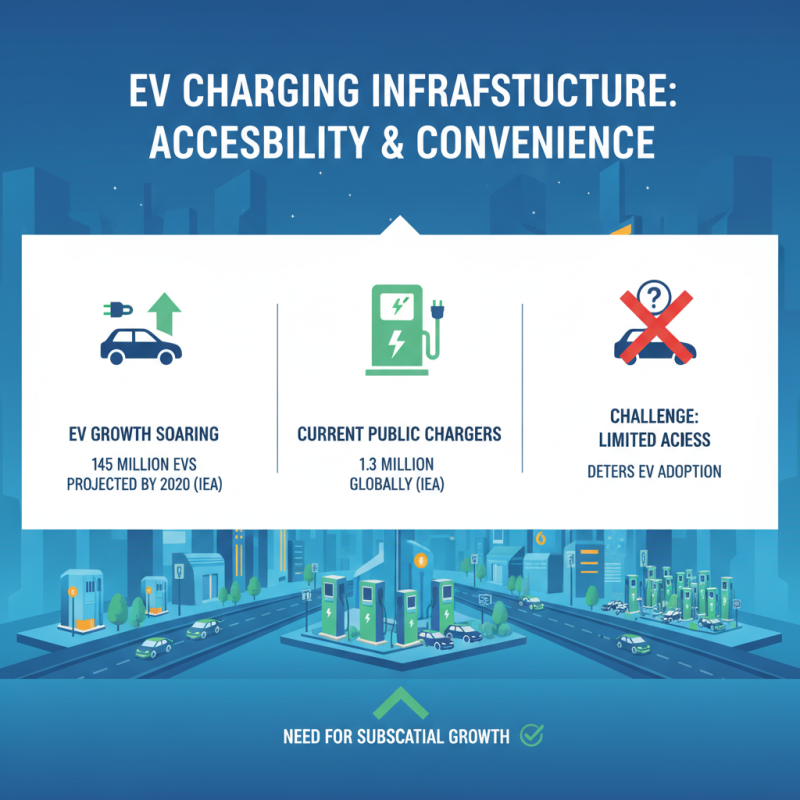
The rise of electric vehicles (EVs) hinges significantly on the accessibility and convenience of charging infrastructure. A recent study by the International Energy Agency (IEA) shows that globally, there are approximately 1.3 million public charging stations available. Yet, this number needs to grow substantially to keep up with the projected 145 million EVs expected on the roads by 2030. Limited access to charging points can deter consumers from going electric.
Users often worry about finding a station when they need it. Reports indicate that 59% of potential EV buyers cite charging availability as a major concern. The more charging stations available, the more confident drivers feel about using EVs on longer journeys. Cities investing in urban charging networks are seeing increased EV adoption rates. For example, a recent urban study demonstrated that adding just one charging station per 1,000 residents significantly boosts EV ownership.
Tips: Always check charging station availability before a trip. Use mobile apps that provide real-time updates on station status. Consider the location of charging points in relation to your usual routes.
The convenience factor remains crucial. Charging an EV takes longer than refueling a gas car. On average, a fast charger might take around 30 minutes to provide a significant charge. Publicly accessible charging stations must be strategically located. Identifying areas where drivers commonly congregate, such as shopping districts or workplaces, can alleviate range anxiety. Still, infrastructure gaps exist, especially in rural areas. Expansion must be inclusive to support widespread adoption.
Impact of Charging Station Networks on Consumer Adoption of EVs
The expansion of charging station networks plays a crucial role in boosting electric vehicle (EV) adoption. Consumers often hesitate to shift to EVs due to range anxiety. If charging stations are not available, potential buyers may feel trapped. Their choice hinges on the convenience of charging access. A robust network of stations alleviates these concerns. It makes owning an EV much more appealing.
Moreover, research shows that areas with numerous charging stations see higher adoption rates. Easy access increases consumer confidence. When charging stations are visible, they signal an investment in EV infrastructure. This fosters a culture of acceptance and usability around EVs. Alternative energy transition depends on how well networks serve communities.
However, disparities in charging station availability exist. Urban areas tend to have more stations than rural regions. This poses a problem. Rural consumers may struggle to charge their vehicles. Addressing these inequalities is vital. As the EV market grows, we must reflect on what infrastructure is necessary for broader acceptance and sustainability.
Environmental Benefits of Widespread Public Charging Stations
Public charging stations play a crucial role in the widespread adoption of electric vehicles (EVs). As more people embrace sustainable transportation, the environmental benefits are significant. These stations reduce greenhouse gas emissions by encouraging the use of clean energy. Public charging options allow drivers to recharge their vehicles with minimal hassle while contributing to a cleaner atmosphere.
Visibility of charging stations also promotes awareness. Drivers become more informed about EV benefits when they see accessible charging points. This visibility can sway potential buyers who may hesitate to transition from gasoline vehicles. Many urban areas struggle with charging infrastructure and need improvement.
Tips for EV users: always plan your route to include charging stations. This habit can prevent range anxiety and encourage long-distance travel. Don't forget to check charging station availability in real time. Sharing this information can help others, promoting a supportive community for EV owners. Consider exploring local incentives that support the growth of these stations, as community involvement is vital for sustainability efforts.
Challenges and Solutions in Expanding Public Charging Infrastructure
Public charging stations play a vital role in the widespread adoption of electric vehicles (EVs). Without reliable charging infrastructure, potential EV buyers may hesitate to switch from traditional vehicles. A study by the International Energy Agency (IEA) indicates that the number of public charging points must triple to meet the growing demand by 2030. This presents significant challenges for stakeholders.
Expanding public charging infrastructure involves various hurdles. One major issue is the uneven distribution of charging stations. Urban areas often have ample access, while rural regions face a shortage. According to the U.S. Department of Energy, about 63% of charging stations are located in metropolitan areas. This disparity can lead to range anxiety for EV users in less populated regions. Solutions include incentivizing the installation of chargers in underrepresented areas.
Another challenge is the high installation costs associated with charging stations. The average cost of a Level 2 charging station can be between $2,000 to $5,000. This can deter businesses from investing in public charging solutions. Effective strategies may involve government subsidies or partnerships with private entities. Addressing these points is critical for increasing the number of charging stations and making EVs a viable option for all consumers.
Electric Vehicle Public Charging Stations Growth
This chart illustrates the growth of public charging stations from 2015 to 2023, highlighting the increase in charging infrastructure which is essential for the adoption of electric vehicles. The data reflects the total number of public charging stations year by year.