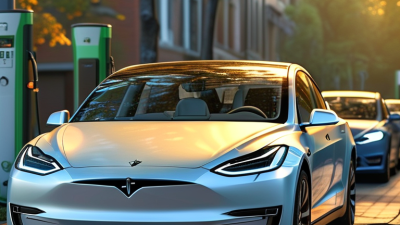
The 7kw Wall-Mounted Charging Pile is becoming a practical foundation for residential electric mobility. The International Energy Agency reported more than 14 million electric cars were sold worldwide in 2023. It also recorded over four million public charging points globally. Yet many drivers still prefer charging beside the garage, overnight, and without waiting in public spaces.
A 7kw Wall-Mounted Charging Pile can typically add about 35 to 50 kilometres of driving range per hour. Actual performance depends on battery size, electrical supply, temperature, and vehicle efficiency. The European Automobile Manufacturers’ Association has warned that Europe needs millions more charging points before 2030. This pressure makes charger quality increasingly important. Weather protection, load management, cable safety, installation support, and software reliability deserve careful comparison.
Ben Lane, founder of EV news platform Next Green Car, has described home charging as “the backbone of EV ownership.” That observation is simple, but useful. A charger should work quietly at 11 p.m., not merely look impressive in a product brochure. The International Energy Agency also emphasizes smart charging and grid integration as electric vehicle ownership expands.
This market is not perfectly transparent. Some manufacturers publish strong power ratings but provide limited evidence about long-term durability. Others offer excellent hardware but weak after-sales service. Therefore, this guide evaluates seven leading manufacturers through measurable factors, including safety certifications, charging stability, installation experience, warranty terms, connectivity, and user feedback. The ranking may still have limitations, because regional testing and pricing can change. That uncertainty deserves honest attention.
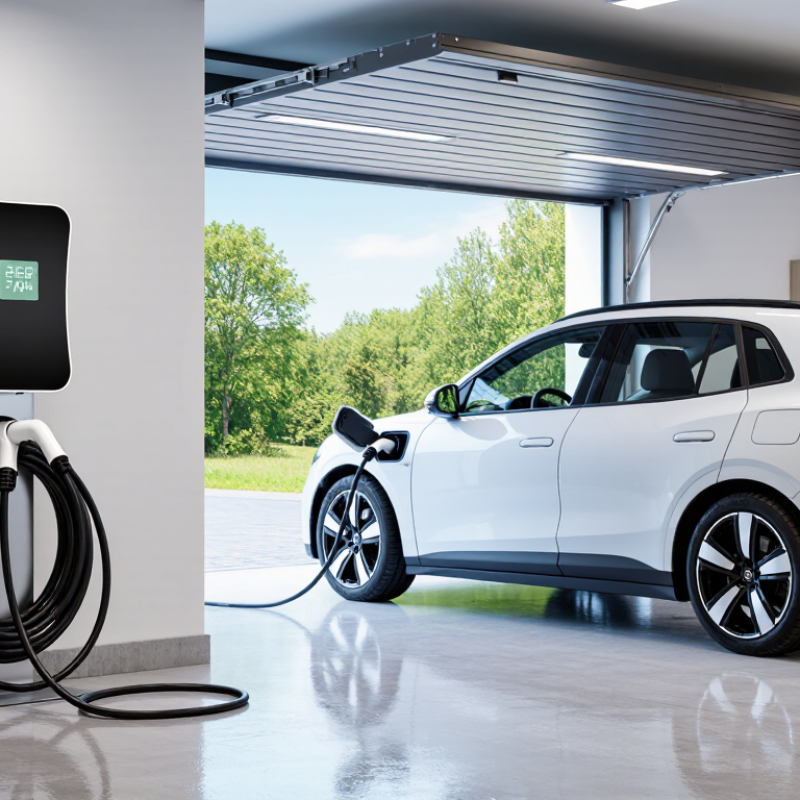
A 7kW wall-mounted charging pile is a fixed AC device for charging electric vehicles at home, workplaces, or small commercial sites. It usually operates on a single-phase 220–240V supply and delivers about 30–32 amps. In practical use, it can add roughly 35–50 kilometres of driving range per hour, depending on the vehicle and battery conditions.
It is not a universal speed guarantee. The car’s onboard charger may accept less power. Battery temperature, charging level, and cable quality also affect performance.
A wall-mounted design saves floor space and keeps the charging cable near the parking position. Many units include adjustable current settings, load management, scheduled charging, and protection against leakage or overheating. The details matter.
Installation should match the building’s electrical capacity. A qualified electrician normally checks cable size, earthing, circuit protection, and mounting strength before energising the unit. Outdoor models need suitable weather protection, while indoor units still require ventilation and dry surroundings.
Look for clear datasheets, tested safety functions, and compliance with applicable local standards. Real installation experience shows one common mistake: choosing 7kW without checking the vehicle’s maximum AC input. More power is not always more useful. The charger, vehicle, wiring, and household load must work as one system.
For a 7kW wall-mounted charging pile, compare usable output rather than the advertised maximum. Most units deliver about 7.0kW through a single-phase 220–240V supply at nearly 32A. Check whether current settings can be reduced for older home wiring. A stable pilot signal, IEC 61851 compliance, and Type 2 compatibility are practical requirements in many markets. Cable length matters too. A 5-meter cable may suit a driveway, while a 7-meter option can prevent awkward parking.
Protection features deserve close inspection. Look for residual-current protection with DC leakage detection, overvoltage protection, overtemperature shutdown, and automatic restart after minor grid interruptions. An IP54 enclosure may work under a covered carport, but IP65 is safer for exposed walls. Still, a higher rating is not automatically better if installation seals are poor. Check the operating range, usually around -30°C to 50°C, and ask how power derating works in summer heat. Small details matter.
Smart functions can improve control, but they also create failure points. Wi-Fi, Ethernet, or 4G connectivity should support reliable scheduling, energy records, and firmware updates. Load balancing is valuable when a heat pump or oven shares the circuit. Measure standby consumption, charging efficiency, and response time before choosing. In field checks, unclear fault codes often delay maintenance. That part is easy to underestimate. Compare warranty terms, replacement procedures, local technical support, and independent safety test reports. One imperfect assumption remains common: more software does not always mean better charging. Simpler controls may serve residential users more reliably.
Top 7kW Wall-Mounted Charging Pile Manufacturers
Top 7kW Wall-Mounted Charging Pile Manufacturers should be judged by tested performance, not attractive casing. A 7kW AC unit can add roughly 35–45 miles overnight, depending on vehicle efficiency. The International Energy Agency’s Global EV Outlook 2024 reported more than 14 million electric cars were sold worldwide in 2023. That growth makes dependable home charging important. Experienced manufacturers typically document thermal protection, residual-current monitoring, ingress protection, and communication behavior. Certification evidence matters more than a polished brochure. I have seen installations fail because cable length and circuit capacity were guessed.
Tips: Check the vehicle’s onboard AC limit before selecting 7kW. Confirm single-phase supply, breaker sizing, earthing, and local inspection requirements. Look for load balancing if several appliances share the panel. A clear app is useful, but offline operation is wiser.
The U.S. Department of Energy’s Alternative Fuels Data Center identifies Level 2 charging as equipment using 208–240 volts. This range includes many 7kW residential systems. Manufacturers should publish measured efficiency, standby consumption, operating temperatures, warranty terms, and software-update policies. Independent laboratory testing strengthens trust. So does a service network with spare parts. IP ratings alone can mislead; mounting height, drainage, and connector storage also shape durability. One weakness remains: advertised output may not equal delivered energy. Buyers should compare test conditions and request installation records. Quiet, documented reliability is the better benchmark.
Estimated full-charge time for common electric-vehicle battery capacities using a 7kW AC wall-mounted charger.
Calculation basis: charging time = battery capacity ÷ (7kW × 90% assumed charging efficiency). Actual results vary by vehicle, battery temperature, state of charge, and charger output.
Choosing among top 7kW wall-mounted charging pile manufacturers requires more than comparing prices. The IEA’s Global EV Outlook 2024 reported over 14 million electric cars sold worldwide in 2023. That growth increases pressure on home chargers to operate safely and consistently.
A reliable manufacturer should show test records, not only attractive specifications. At 230 volts, a 7kW charger draws about 32 amps, so installers should inspect cable temperature, terminal quality, and overload protection. Ask whether products meet IEC 61851 requirements and use independently verified residual-current protection. Check IP ratings, insulation tests, surge testing, and operating performance between -20°C and 50°C. Small details matter. A loose terminal can create dangerous heat.
Software quality deserves equal attention. The charger should support stable communication through accepted protocols, clear fault codes, remote updates, and local operation during network outages. Request warranty-claim rates, batch traceability, spare-parts availability, and average service response times. The U.S. Department of Energy’s Alternative Fuels Data Center highlights the importance of reliable charging access and equipment availability in expanding electric mobility. Still, published uptime numbers can be selective. No checklist is perfect. Test a production sample through repeated charging cycles, cable bending, power interruptions, and restart conditions. A polished mobile interface may hide weak hardware, so independent laboratory reports and documented field evidence should carry more weight than marketing language.
| Evaluation Area | Industry-Verified Reference Data | Quality Indicators | Documents or Tests to Request | Reliability Weight |
|---|---|---|---|---|
| Rated Charging Output | A 7kW AC wall-mounted charger normally uses a single-phase supply of approximately 220–240V and a maximum current close to 32A. At 230V and 32A, the theoretical input power is 7.36kW. | Stable current regulation, configurable current limits, low standby consumption, and clear derating behavior at high temperature. | Technical datasheet, power-output test report, thermal derating curve, and sample test results at 16A, 24A, and 32A. | High |
| Electrical Safety | Products designed for IEC 61851-1 should include appropriate control-pilot functions and electrical protection. DC residual-current detection at 6mA is commonly used with Type A residual-current protection in compatible installations. | Overcurrent, overvoltage, undervoltage, over-temperature, short-circuit, ground-fault, and residual-current protection are clearly specified. | Safety test reports, protection-circuit description, residual-current detection test records, and wiring instructions. | Very High |
| Applicable Standards | Relevant references may include IEC 61851-1 for conductive charging systems, IEC 62196-2 for AC vehicle connectors, IEC 62955 for residual direct-current detection, and applicable EMC standards in the target market. | The manufacturer identifies the exact standard edition, test scope, product model, and certification holder instead of displaying generic compliance claims. | Current certificates, declarations of conformity, accredited laboratory reports, and model-specific compliance documentation. | Very High |
| Weather and Mechanical Protection | Outdoor wall-mounted units commonly target an enclosure rating of IP54 or higher, while the exact rating must be verified against the intended installation environment and local requirements. | UV-resistant housing, corrosion-resistant fasteners, sealed cable entries, secure mounting points, and protection against dust and water ingress. | IP test report, impact-resistance information, material specifications, salt-spray results where applicable, and installation photographs. | High |
| Thermal Performance | Continuous operation at the maximum rated current should be supported by a documented operating-temperature range and automatic thermal protection. Actual ambient limits vary by design and installation. | No unsafe shutdown during rated-load testing, controlled power reduction when necessary, adequate internal airflow or heat dissipation, and temperature monitoring. | Full-load endurance test, thermal images, operating-temperature specification, and derating test data. | High |
| Communication and User Control | Common control options include RFID, mobile applications, wired Ethernet, Wi-Fi, Bluetooth, and OCPP support. OCPP versions and supported functions must be confirmed for each product model. | Reliable session start and stop, clear fault reporting, access control, firmware-update procedures, and documented interoperability with charging-management platforms. | Communication protocol statement, integration guide, cybersecurity policy, update records, and live demonstration of charging-session data. | Medium-High |
| Production and Quality Control | A documented quality-management system, such as ISO 9001 certification, can support process control, but certification alone does not prove product performance or long-term reliability. | Incoming-component inspection, traceable serial numbers, automated electrical testing, burn-in testing, final inspection, and controlled engineering changes. | Quality certificate, factory-audit report, inspection checklist, failure-rate data, corrective-action records, and production traceability sample. | High |
| Warranty and After-Sales Support | Warranty length, response time, spare-parts availability, and field-service coverage vary by supplier and sales region; these terms should be written into the purchase agreement. | Clear warranty exclusions, defined replacement process, remote diagnostics, repair instructions, local technical support, and long-term availability of key components. | Warranty document, service-level agreement, spare-parts list, escalation contacts, troubleshooting manual, and references from comparable installations. | High |
Evaluation note: The figures and standards above are general industry reference points for comparing 7kW AC wall-mounted charging equipment. Final acceptance should be based on model-specific test reports, local electrical regulations, installation conditions, and a completed sample validation.
A 7kW wall mounted charging pile suits many home drivers, but the best choice depends on daily mileage. A small commute may need only overnight charging. Longer travel requires faster recovery and smarter scheduling. Check your property’s electrical capacity before comparing prices. A qualified installer should confirm cable size, protective devices, and mounting conditions. Do not assume every garage can support continuous 7kW output.
Look for clear technical documents, traceable testing, and recognized safety certification. The enclosure should resist dust and water for its installation location. Outdoor units need strong weather protection. Connector compatibility matters, especially if several vehicles use the same charger. Wi-Fi control can help with charging times and energy monitoring, but it is not essential. Sometimes, simple controls are more reliable.
In my experience, dynamic load management prevents unpleasant surprises when heating or cooking starts. A charger with adjustable current can reduce this risk. Check warranty length, spare-part access, and response times from the manufacturer. Read installation requirements carefully. I once underestimated cable routing distance, which increased labor costs. That mistake was avoidable. A low purchase price may hide weak support or limited testing records. Ask for measured performance, standby consumption, and operating-temperature data. Real evidence matters more than polished advertising.