China has become a major manufacturing base for Commercial Charging Stations, serving fleets, workplaces, retail sites, and public transport hubs. Its leading suppliers compete through charging speed, operating software, hardware reliability, and after-sales support. The strongest manufacturers do more than ship cabinets. They design complete systems around electricity capacity, vehicle schedules, climate conditions, and daily traffic patterns.
Fatih Birol, Executive Director of the International Energy Agency, has said, “The future of road transport is electric.” That future needs dependable infrastructure, not impressive specifications alone. A 480-kilowatt charger may look powerful, yet its value depends on grid stability, connector compatibility, thermal management, and service response. Small details matter. Cable cooling matters. Payment recovery matters. Uptime matters most.
This overview examines China’s top Commercial Charging Stations suppliers through practical and technical criteria. These include product range, charging performance, safety controls, software integration, certifications, production capability, and international support. Supplier rankings can change quickly. Public data may also compare different product categories unfairly. That is worth acknowledging.
A careful buyer should request field-test records, warranty terms, spare-part arrangements, and documented uptime figures. Visiting an operating site can reveal more than a polished brochure. Some suppliers excel at large fleet depots, while others perform better in shopping centers or highway corridors. The right choice depends on use case, not brand visibility alone. This guide offers a structured starting point for identifying capable Chinese manufacturers and questioning their promises with practical judgment.
Commercial charging stations are fixed systems designed to recharge electric vehicles in workplaces, retail areas, parking facilities, and fleet depots. Unlike home chargers, they support heavier daily use, shared access, and monitored energy management. A practical definition includes the charging hardware, electrical protection, software, payment controls, and maintenance service.
Common types include AC destination chargers, DC fast chargers, and high-power fleet chargers. AC units suit offices and hotels because vehicles often stay parked for hours. DC chargers deliver energy quickly for taxis, delivery fleets, and highway stops.
Core functions include power conversion, user authentication, load balancing, billing records, fault detection, and remote monitoring. In field inspections, clear cable storage and weather-resistant housings often prevent small failures. Safety depends on certified installation, grounding, ventilation, and scheduled testing. Standards and local electrical requirements must guide every project.
Tips: Check vehicle compatibility before selecting output power. Measure peak site demand, not average demand. Leave space for maintenance access. Review uptime reports and response times from suppliers. A simple screen helps drivers. Real performance can differ from brochure figures, especially during heat, cold, or crowded periods. No site plan is perfect. Reviewing charger data monthly can reveal payment errors, idle vehicles, or overloaded circuits. That evidence supports safer upgrades and more reliable service.
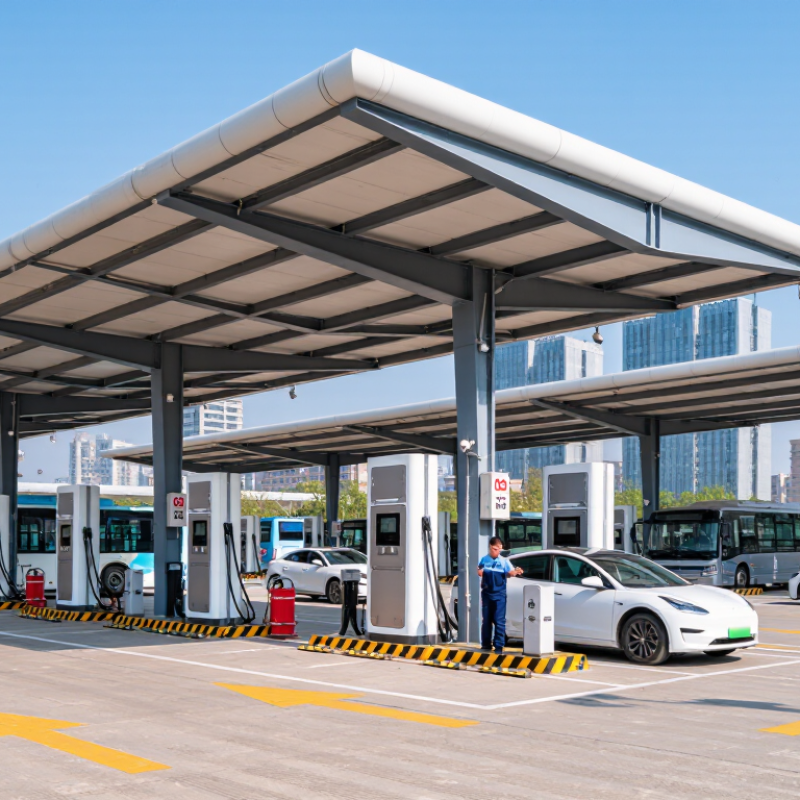
China’s commercial EV charging market is expanding beyond private-car use. Electric buses, delivery vans, taxis, and heavy-duty trucks create steady demand for reliable charging. In industrial parks, a typical site may combine high-power DC chargers, parking bays, transformers, and a small control room. Operators must balance charging speed with grid capacity, land costs, and vehicle schedules.
Field experience shows that uptime matters more than impressive power ratings. A charger that stops during a morning delivery peak can delay several routes. Good suppliers therefore provide remote diagnostics, clear maintenance procedures, spare components, and trained service teams. They also support load management, accurate billing, and compatibility with common communication standards. Safety depends on more than software. Cable condition, ventilation, drainage, emergency shutdowns, and routine inspections deserve equal attention.
China’s industry is becoming more coordinated with renewable energy, energy storage, and digital fleet management. Charging hubs near logistics centers can reduce empty travel and improve vehicle utilization. However, rapid construction can create underused sites, long queues, or uneven regional coverage. The numbers look impressive, but utilization can disappoint. Commercial planning should study traffic patterns by hour, not only total vehicle ownership. Suppliers also need to publish clearer data on failure rates and repair times. That gap remains important. A cheaper installation may become expensive when downtime, peak electricity charges, and repeated civil work are included. Reliable development will depend on practical testing, transparent contracts, and patient investment rather than speed alone.
China’s leading commercial charging station suppliers focus on reliability, power efficiency, and safe daily operation. Their systems commonly use modular power modules, allowing technicians to replace one unit without shutting down the entire cabinet. High-power models may use liquid cooling to control cable and connector temperatures during repeated fast charging.
Dynamic load balancing is another important technology. It distributes available electricity across several vehicles and reduces pressure on the building’s electrical system. Remote monitoring platforms track voltage, current, temperature, fault codes, and charging duration. Many stations also support open communication protocols, enabling easier integration with payment systems, energy management tools, and fleet software. However, software compatibility still needs careful testing. A smooth demonstration does not always guarantee stable operation after installation.
Tips: Check the site’s transformer capacity before choosing output power. Inspect cable flexibility, connector heat, emergency stops, and drainage conditions. Ask suppliers for protection ratings, test records, maintenance response times, and clear warranty terms. During commissioning, test several vehicles at once. Real traffic exposes weaknesses that factory tests may miss. Regular firmware updates and thermal inspections can prevent small faults from becoming costly downtime. Suppliers with documented testing procedures and responsive technical teams usually provide more dependable commercial charging infrastructure.
| Technology Area | Typical Technical Configuration | Common Standards or Protocols | Commercial Charging Application | Operational Benefits | Important Deployment Considerations |
|---|---|---|---|---|---|
| High-Power DC Charging | Modular DC power cabinets with common site outputs from approximately 60 kW to 480 kW per charging system. Higher-capacity cabinet combinations can support fleet and highway applications. | GB/T 20234IEC 61851CCS compatibility where required | Public fast-charging hubs, highway rest areas, commercial vehicle depots, logistics fleets, and electric bus facilities. | Shorter charging sessions, better utilization of high-traffic sites, and flexible allocation of power among multiple connectors. | Requires sufficient grid capacity, appropriately sized transformers, thermal management, and careful cable and connector selection. |
| Liquid-Cooled Charging Cables | Liquid-cooled conductors and connector assemblies designed for sustained high-current operation, particularly in high-power DC systems. | IEC 61851GB/T 20234Connector safety requirements | Ultra-fast public charging, electric truck corridors, bus charging, and high-throughput fleet depots. | Supports higher current in a manageable cable size and can improve user handling compared with equivalent air-cooled cable designs. | Needs coolant monitoring, leak protection, scheduled maintenance, and protection against connector or hose damage. |
| Modular Power Conversion | Replaceable rectifier modules, commonly using power blocks in the approximate 15–30 kW class, combined in parallel to match site demand. | IEC 61000IEC 61851Power-quality requirements | Multi-port public stations, fleet charging yards, charging plazas, and depot installations with changing capacity requirements. | Improves serviceability, allows staged capacity expansion, and can maintain partial operation when one module is offline. | Module compatibility, cabinet ventilation, spare-parts availability, and remote fault diagnostics should be included in the service plan. |
| Dynamic Power Distribution | Centralized control allocates available DC power across several vehicles according to connector demand, vehicle battery status, and site limits. | OCPP 1.6JOCPP 2.0.1Local energy-management interfaces | Charging hubs with many simultaneous users, bus depots, taxi charging stations, and constrained urban sites. | Improves charger utilization, reduces unnecessary peak demand, and helps prevent site overload. | Requires accurate meter data, stable communication, clear priority rules, and coordination with the site energy-management system. |
| Smart Charging and Load Management | Scheduled charging, power caps, demand-response logic, time-of-use control, and charging-priority algorithms. | OCPP 1.6JOCPP 2.0.1ISO 15118 functions where supported | Workplace charging, residential-commercial complexes, fleet depots, and sites operating under time-of-use electricity tariffs. | Can lower demand charges, coordinate charging windows, and make better use of available transformer capacity. | Performance depends on tariff structure, accurate schedules, reliable connectivity, and user consent for managed charging. |
| Vehicle-to-Grid Readiness | Bidirectional power-conversion capability and control software designed for energy flow from the vehicle back to a building or the grid. | ISO 15118-20IEC 61851Grid interconnection rules | Pilot projects, fleet energy management, microgrids, emergency backup systems, and renewable-energy balancing. | May provide peak shaving, backup power, renewable-energy integration, and additional flexibility for managed fleets. | Requires compatible vehicles, utility approval, bidirectional meters, protection coordination, and clearly defined battery-use policies. |
| Charging-Station Management Platform | Cloud or private-server platform for station monitoring, remote configuration, user management, transaction records, alarms, and software updates. | OCPP 1.6JOCPP 2.0.1REST APIs | Multi-site public networks, commercial property portfolios, fleet operations, and third-party operation and maintenance services. | Provides centralized visibility, remote troubleshooting, utilization analysis, and easier management of distributed assets. | Cybersecurity, data ownership, API documentation, system availability, and integration with payment and enterprise systems are essential. |
| Remote Diagnostics and Predictive Maintenance | Real-time monitoring of temperature, insulation, contactors, residual current, connector status, power modules, and communication faults. | OCPP diagnosticsIEC 61851 safety monitoringDevice telemetry | Large public networks, unattended charging plazas, bus depots, and geographically distributed commercial installations. | Helps reduce downtime, shorten fault response, and identify recurring component or environmental problems. | Requires calibrated sensors, reliable event logs, clear alarm thresholds, and qualified local maintenance personnel. |
| Payment and User Authentication | RFID identification, QR-code access, mobile applications, backend authorization, and integration with commercial payment systems. | OCPP authorizationISO 15118 Plug & Charge where supportedLocal payment regulations | Public charging stations, shopping centers, parking facilities, workplaces, and managed fleet access points. | Enables convenient access control, automated billing, tariff management, and differentiated pricing for fleet or public users. | Payment security, privacy compliance, offline authorization, refund handling, and network availability should be addressed before commissioning. |
| Safety and Protection Systems | Overvoltage, overcurrent, short-circuit, leakage-current, overtemperature, emergency-stop, insulation-monitoring, and connector-locking functions. | IEC 61851IEC 60364-7-722GB/T safety requirements | All commercial AC and DC charging installations, especially outdoor and high-power environments. | Protects users, vehicles, charging equipment, and upstream electrical infrastructure during abnormal operating conditions. | Protection settings must match local electrical design, grounding arrangements, environmental conditions, and inspection requirements. |
| Thermal Management | Air cooling for standard power levels and liquid or enhanced forced-air cooling for high-power cabinets, cables, and power electronics. | IEC 61851IEC 60068 environmental testingIngress-protection requirements | Outdoor charging plazas, hot or cold climates, enclosed parking facilities, and high-utilization fleet depots. | Helps maintain stable output, prolong component life, and reduce thermal derating during repeated charging sessions. | Site ventilation, dust filtration, coolant service, acoustic limits, condensation control, and ambient-temperature range must be evaluated. |
| Renewable-Energy and Energy-Storage Integration | Coordination among photovoltaic generation, battery energy storage, charging loads, and the utility connection through an energy-management controller. | IEC 62933 for energy storage systemsOCPPLocal grid codes | Solar-assisted charging hubs, remote sites, industrial parks, microgrids, and locations with limited grid capacity. | Can reduce grid peak demand, improve renewable-energy self-consumption, and provide resilience during selected grid events. | Requires coordinated protection, fire safety, battery thermal management, energy forecasting, and compliance with local interconnection rules. |
| Weatherproof and Corrosion-Resistant Design | Outdoor cabinets with sealed enclosures, drainage, anti-condensation measures, UV-resistant materials, and corrosion protection. | IEC 60529 IP ratingsIEC 62262 IK ratingsIEC 60068 environmental tests | Outdoor parking areas, coastal regions, industrial sites, highway service areas, and logistics yards. | Improves equipment durability and reliability under rain, dust, impact, humidity, salt spray, and temperature variation. | Actual protection depends on installation quality, cable entry design, drainage, cleaning, and periodic enclosure inspection. |
| Fleet-Oriented Charging Optimization | Vehicle scheduling, state-of-charge targets, route planning interfaces, depot power allocation, and charging completion forecasts. | OCPPFleet-management APIsISO 15118 data exchange where supported | Electric buses, delivery fleets, taxis, sanitation vehicles, port equipment, and warehouse vehicles. | Aligns charging with departure schedules, reduces idle charging time, and supports predictable fleet availability. | Needs accurate vehicle data, operational schedules, charger availability, and fallback procedures for communication failures. |

Choosing China’s top commercial charging station suppliers requires more than comparing prices. Look for proven field experience in malls, fleets, offices, and roadside facilities. Ask for project references with charger quantity, operating hours, climate conditions, and maintenance records. Reliable suppliers should provide clear test reports, safety certifications, factory quality controls, and documented production capacity. Their technical teams should explain power sharing, charging protocols, payment integration, and remote monitoring without using vague promises.
Tips: Request a working sample or pilot installation. Check charging stability during peak demand, not only in a quiet showroom. Review the warranty line by line, including response time, replacement parts, software updates, and labor coverage. Ask who provides local service and how quickly engineers can arrive. A low purchase price may become expensive when downtime affects customer trust.
Evaluate the supplier’s communication as carefully as its hardware. Can the team answer electrical questions clearly? Do they identify site risks before quoting? Strong suppliers usually provide load calculations, layout drawings, installation guidance, and commissioning procedures. Review cybersecurity practices and data ownership for connected systems. Speak with existing customers, but remain careful; one successful project does not prove consistent performance. Even experienced buyers can overlook spare-part availability or software compatibility. A small pilot often reveals those weaknesses before a large order.
China’s commercial EV charging sector is moving beyond simple roadside electricity sales. Charging stations now serve delivery fleets, electric buses, shopping centers, hotels, workplaces, and highway rest areas. The International Energy Agency’s Global EV Outlook 2024 reported more than four million public charging points worldwide at the end of 2023, with China holding the largest share. This growth increases demand for reliable commercial charging stations, especially in dense urban districts.
Services now matter as much as hardware. Operators provide load management, remote monitoring, digital payments, preventive maintenance, and fleet charging schedules. A logistics depot may charge dozens of vehicles overnight, while a retail site needs short, predictable sessions. The IEA also noted that global public charger additions grew by about 40% in 2023. Yet uptime remains a practical weakness. A powerful charger that stays offline is only an expensive parking space.
Tips: Match charger power with vehicle duty cycles, not marketing claims. Check local grid capacity before installation. Keep spare cables and clear repair procedures. Small details prevent long queues.
Future commercial applications may combine battery storage, solar generation, artificial intelligence, and vehicle-to-grid services. High-power charging will support heavy trucks, but grid upgrades may become costly. Megawatt charging is promising, though standards and site economics are still developing. The U.S. National Renewable Energy Laboratory has highlighted managed charging as a way to reduce peak-grid pressure. Results will vary by location. That uncertainty deserves honest planning, not perfect forecasts.
Global public EV charging infrastructure expanded from approximately 1.8 million points in 2021 to more than 4 million in 2023. This growth reflects rising demand from commercial fleets, workplaces, retail destinations, residential developments, and highway corridors. Commercial charging suppliers increasingly combine hardware, installation, software management, payment services, maintenance, and energy optimization.
Data source: International Energy Agency, Global EV Outlook 2024. Values are rounded global estimates of public charging points.