Top 10 Ev Car Charger Options to Power Your Electric Vehicle?
As the world embraces electric vehicles, finding the right EV Car Charger becomes essential. The market is evolving, offering various options to suit different needs. Choosing a charger isn't just about price; it's about compatibility, charging speed, and installation. Many consumers struggle with these decisions.
Understanding your EV's requirements is vital. Some chargers are designed for home use, while others are better suited for public stations. Features like smart technology can enhance your charging experience, yet they may add complexity. Reliability is crucial; a faulty charger can lead to frustration and downtime.
A diverse selection of chargers exists, each with distinct features. Consider factors such as power output and ease of use. Not every option is perfect; some may lack necessary certifications. Researching can help in finding the best match for your vehicle and lifestyle. Take the time to weigh your options carefully. The right EV Car Charger can make a significant difference in your driving experience.
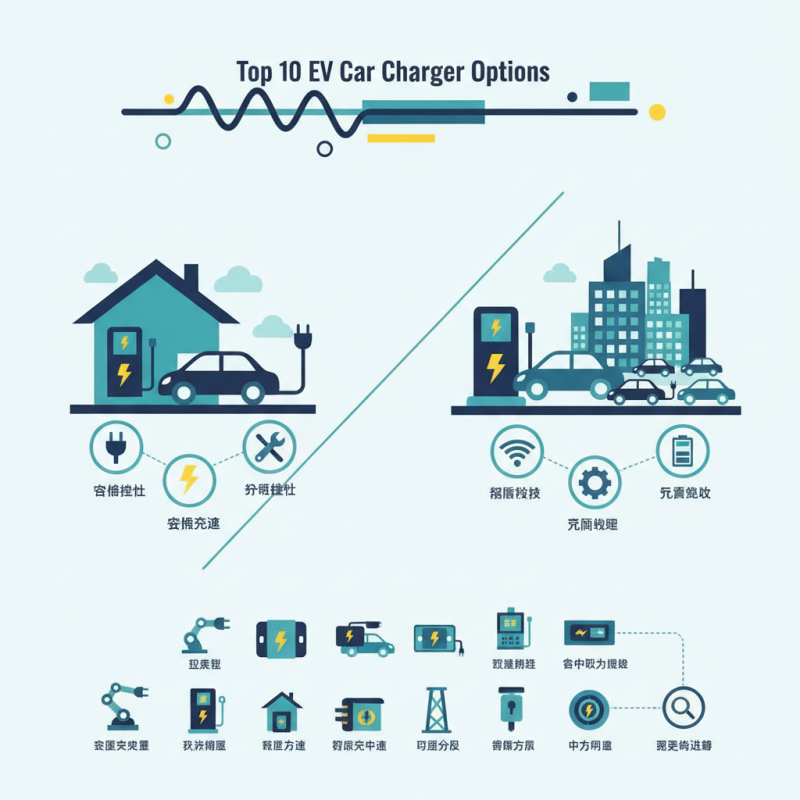
Overview of Electric Vehicle Charging Options
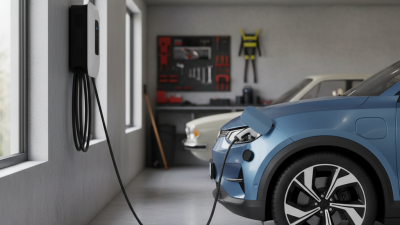
Electric vehicle charging options span a diverse range of solutions. One popular method is home charging, which allows users to power their vehicles overnight. Installing a dedicated charger can make this process quicker than using a standard outlet. However, it's important to consider local electrical capacity and potential installation costs.
Public charging stations are also becoming widely available. They can be found at shopping centers, parking lots, and along highways. While this provides convenience, you may face longer wait times. Not every station offers the same charging speed, leading to frustration. Some electric vehicle owners recommend planning trips around these stations to avoid surprises.
Additionally, workplaces may provide charging options, promoting eco-friendliness. However, not all buildings prioritize this. Owners should advocate for more charging infrastructure at their jobs. Ultimately, the variety of charging solutions presents both opportunities and challenges in the transition to electric vehicles. You may need to adapt and seek the best options suited for your needs.
Top 10 EV Car Charger Options to Power Your Electric Vehicle
| Charger Type |
Charging Speed (kW) |
Connection Type |
Installation Location |
Typical Cost |
| Level 1 Charger |
1.4 - 2.4 |
Standard outlet (120V) |
Home |
$300 - $600 |
| Level 2 Charger |
3 - 22 |
Type 1 or Type 2 |
Home & Public |
$500 - $1,500 |
| DC Fast Charger |
24 - 350 |
CCS, CHAdeMO |
Public charging stations |
$10,000 - $40,000 |
| Solar Charger |
Varies |
Custom |
Home |
$2,000 - $20,000 |
| Portable Charger |
3 - 10 |
Type 1 or Type 2 |
Home & Travel |
$300 - $800 |
| Smart Charger |
7 - 22 |
Type 1 or Type 2 |
Home & Public |
$600 - $1,800 |
| Fleet Charger |
20 - 350 |
CCS, CHAdeMO |
Commercial |
$10,000 - $50,000 |
| Universal Charger |
3 - 22 |
Various connectors |
Home & Public |
$500 - $2,000 |
| Home Energy Management Charger |
7 - 22 |
Type 1 |
Home |
$700 - $2,500 |
| Inductive Charger |
Varies |
Custom |
Home |
$3,000 - $15,000 |
Understanding EV Charger Types: Level 1, Level 2, and DC Fast Charging
Electric vehicle (EV) chargers come in various types, primarily categorized into Level 1, Level 2, and DC Fast Charging. Each type offers distinct advantages and charging speeds. Level 1 chargers use a standard household outlet. They provide about 4-5 miles of range per hour. This is suitable for overnight charging but can be slow for regular use.
Level 2 chargers significantly improve charging speed, delivering 10-60 miles of range per hour. These chargers are often found in public locations and residential settings. According to industry reports, over 70% of EV owners prefer Level 2 home chargers for daily convenience. DC Fast Charging offers the fastest option, providing up to 80% charge in about 30 minutes. This is ideal for road trips and quick stops. However, the availability of DC Fast Chargers may vary in some areas.
Tips: If you are considering an EV charger, evaluate your daily driving needs. Assess home charging capabilities versus public infrastructure. It’s also wise to invest in a charger compatible with your vehicle's specifications. Consider your parking situation when choosing the right charger. Proper planning ensures you maximize the benefits of your EV experience.
Top Features to Consider When Choosing an EV Charger
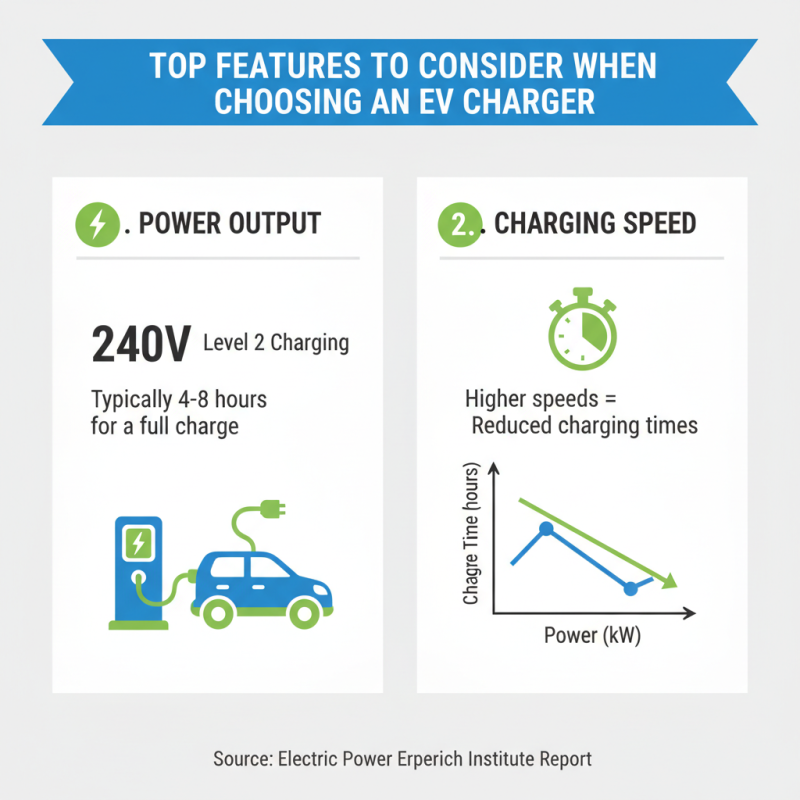
When choosing an EV charger, several features demand attention. Power output is crucial. Most home chargers offer Level 2 charging, delivering 240 volts. These can typically charge a vehicle in 4 to 8 hours. A report by the Electric Power Research Institute highlights that higher charging speeds can reduce charging times significantly.
Another factor is the connector type. Common options are J1772 and CCS. The latter allows for faster charging in many areas. According to the U.S. Department of Energy, over 80% of EV charging occurs at home. This statistic illustrates the importance of selecting a suitable home charger.
Smart features enhance convenience. Many modern chargers can be connected to Wi-Fi. This allows users to schedule charging during off-peak hours. However, not all smart chargers function seamlessly with different vehicle models. Compatibility is worth checking before making a purchase. While many chargers claim to be universal, there can be instances of connectivity issues. As the EV market evolves, it's vital to stay informed about new technologies and standards.
Review of the Top 10 EV Charger Options Available Today
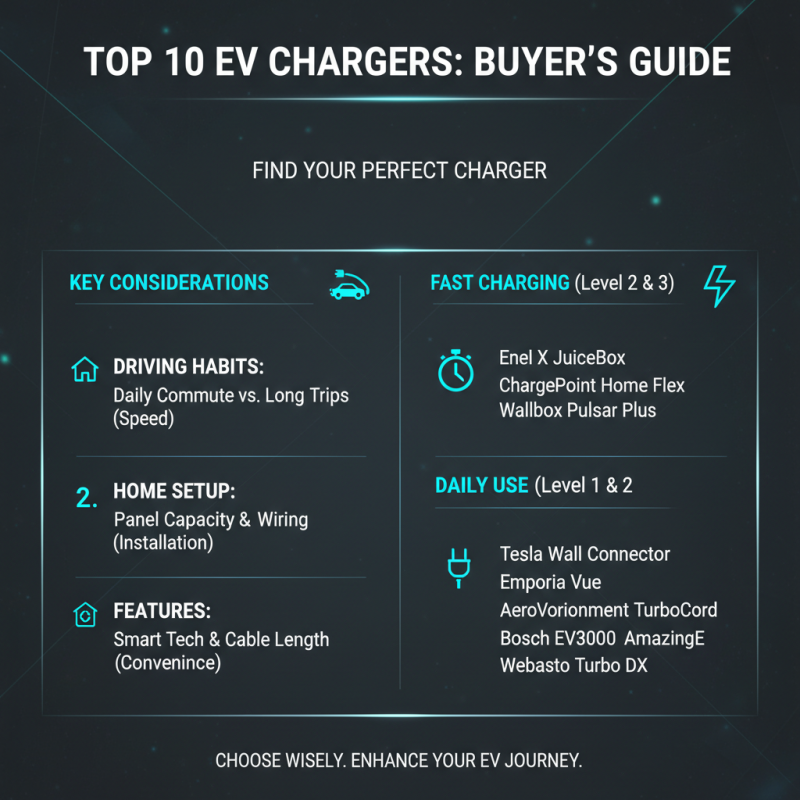
When it comes to choosing an EV charger, options abound. Each charger varies in features, power output, and installation requirements. You’ll want to consider your driving habits and home setup. Some chargers are more suited for fast charging, while others offer greater convenience for daily use. In any case, selecting the right one influences your overall EV experience.
Tips: Assess your charging needs. Are you often in a hurry? Look for models that support higher power outputs. Think about installation too. Some chargers require professional help, which adds to the cost. Others feature plug-and-play designs for easy setup.
Many users overlook the importance of portability. If you travel frequently or stay in multiple locations, consider a portable charger. This choice allows flexibility. However, be cautious about compatibility with various EV models. It's not always straightforward. Always verify if your chosen charger meets your vehicle's requirements. Remember, a misstep here can lead to frustrating charging sessions.
Installation and Maintenance Tips for Your EV Charger
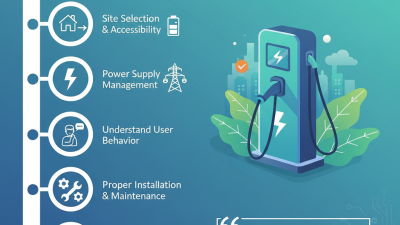
Installing an EV charger at home is essential for electric vehicle owners. It provides convenience and quicker charging times, which can be a game changer. According to a recent study, around 80% of EV charging occurs at home. Yet, many overlook crucial installation factors.
Location is key. Placing your charger close to the electrical panel can reduce installation costs. This minimizes the need for long wiring runs. A professional electrician is important; they ensure safety and compliance with local codes. Not all homes have the same electrical capacity. Some upgrades might be necessary, like a new circuit breaker or additional wiring.
Maintenance is simple yet often neglected. A clean charging station is necessary to avoid any dirt buildup. Regularly check connections for wear and tear. According to industry standards, inspecting the charger every few months can help prolong its lifespan. An estimated 30% of EV owners fail to maintain their chargers adequately. This can lead to reduced efficiency and even safety hazards. A proactive approach saves time and money in the long run.