
2026 Top Charging Pile Types for Global Buyers?
Global electric vehicle sales are reshaping the Charging Pile Industry in 2026. Buyers now compare more than charging speed. They examine connector standards, installation conditions, software compatibility, maintenance access, and total operating cost. A busy highway station may need liquid-cooled DC chargers, while a residential building may require compact AC units with load balancing. The right choice depends on location, traffic patterns, grid capacity, and local user habits.
Daniel Fraile, Chief Policy Officer at CharIN, has stated, “Interoperability is the key to unlocking mass EV adoption.” This principle remains highly practical for global buyers. A charger that works smoothly across vehicle brands can reduce customer complaints and protect long-term investment. Open communication protocols, remote diagnostics, payment flexibility, and reliable cable design also matter. Hardware alone cannot guarantee a successful charging network.
This guide examines the leading charging pile types expected to influence international purchasing decisions in 2026. It considers AC slow chargers, DC fast chargers, high-power systems, portable units, solar-integrated solutions, and fleet charging equipment. Each type has clear strengths and limitations. Faster is not always better. High-power equipment can increase installation costs and grid pressure. Meanwhile, affordable AC chargers may deliver better value in workplaces and homes.
The market still has gaps. Standards are improving, but regional requirements remain uneven. Some product claims also deserve closer checking. Buyers should request tested performance data, warranty terms, cybersecurity information, and service response commitments. A reliable supplier should explain failures, not hide them. This article offers a practical framework for comparing technologies before large-scale procurement begins.
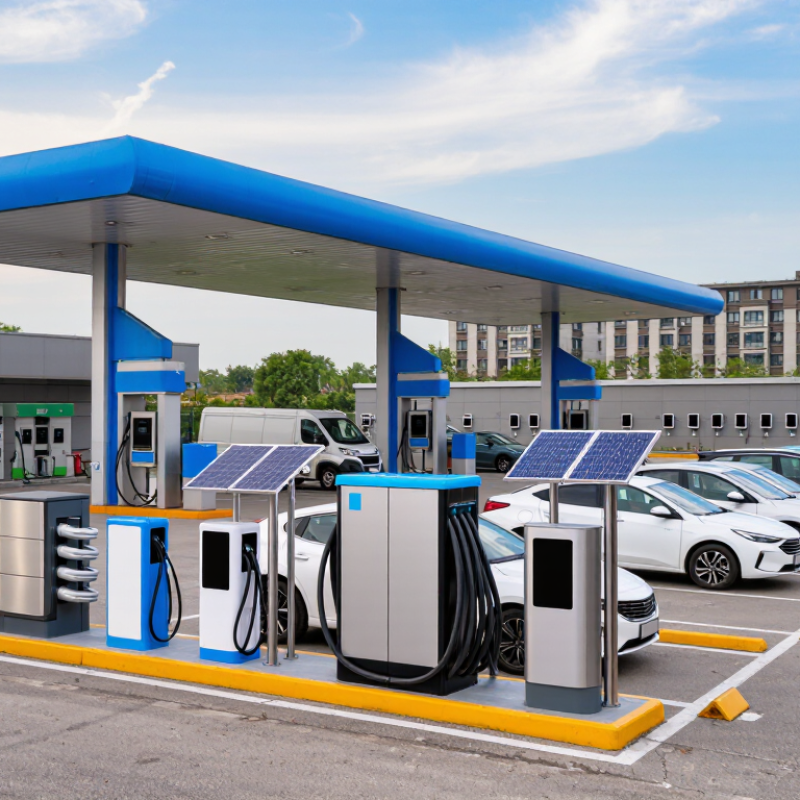
What Is an EV Charging Pile and How Does It Work?
2026 Top Charging Pile Types for Global Buyers
What Is an EV Charging Pile and How Does It Work?
An EV charging pile is equipment that safely transfers electricity to an electric vehicle. It communicates with the vehicle before power flows. The vehicle’s battery management system checks voltage, temperature, and charging limits. The pile then adjusts current continuously.
AC piles are common at homes, offices, and parking areas. They send alternating current to the vehicle’s onboard charger. Charging is usually slower, but installation costs are often lower. DC fast-charging piles convert power outside the vehicle. They deliver direct current to the battery and can reduce charging time significantly. Heat, grid capacity, and cable weight remain practical concerns.
The International Energy Agency reported more than four million public charging points worldwide at the end of 2023. It also recorded over 1.3 million new public points during that year. These figures show strong infrastructure growth, but availability is uneven. Urban sites may need load balancing, while rural locations often need stronger grid connections. The U.S. Department of Energy notes that charging performance depends on vehicle limits, battery temperature, and electrical supply.
For global buyers, power rating alone is not enough. Check connector compatibility, protection functions, communication standards, and weather resistance. A 22-kilowatt AC pile may suit overnight parking better than a costly high-power unit. High-power DC equipment sounds attractive, yet demand charges and idle periods can weaken its economics. Real projects are messier than catalog specifications.
2026 Top Charging Pile Types for Global Buyers: What Is an EV Charging Pile and How Does It Work?
An EV charging pile, also called an EV charger or Electric Vehicle Supply Equipment (EVSE), connects an electric vehicle to an electrical supply. It controls and monitors power delivery and communicates with the vehicle; for AC charging, the vehicle’s onboard charger converts AC power to battery-ready DC, while a DC charger performs that conversion inside the charging station.
| Charging Pile Type | Typical Power and Supply | How It Works | Common Applications | Typical Charging Considerations | Buyer Checklist |
|---|---|---|---|---|---|
| AC Level 1 / Low-Power AC | Typically about 1.4–2.3 kW in markets using 120 V household circuits. Exact ratings depend on local electrical codes and equipment. | Supplies AC power to the vehicle. The vehicle’s onboard charger converts it to DC for the battery. | Home parking, overnight charging, and locations where daily driving distances are modest. | Usually the slowest option. Charging time depends on the vehicle’s onboard charger, battery size, and available circuit capacity. | Check outlet and circuit ratings, grounding, cable requirements, local safety rules, and whether a dedicated circuit is needed. |
| AC Level 2 / Standard AC | Commonly around 3.3–22 kW, depending on voltage, phase, circuit capacity, and the vehicle’s onboard charger. | Delivers AC power through EVSE; the vehicle’s onboard charger determines how much AC it can convert to DC. | Homes, workplaces, hotels, retail sites, apartment parking, and public destination charging. | A higher-rated station does not guarantee faster charging if the vehicle’s onboard charger or site supply is the limiting factor. | Confirm local single- or three-phase supply, connector compatibility, load management, metering, networking, and installation requirements. |
| DC Fast Charging | Often about 25–150 kW. Actual output varies with the station, vehicle, battery temperature, and state of charge. | Converts AC to DC in the charging station and supplies DC to the vehicle battery, subject to vehicle communication and safety controls. | Highways, urban public hubs, fleet depots, and sites needing shorter stops than AC charging allows. | Charging power commonly tapers as the battery approaches a high state of charge. The vehicle’s maximum DC charging rate is a key limit. | Check regional connector standards, grid capacity, cooling and service needs, payment options, communications, and expected utilization. |
| High-Power DC Charging | Typically about 150–350 kW for current high-power installations; the vehicle must support the requested power to benefit from it. | Uses station-based power conversion and control to provide high-voltage DC, while the vehicle manages battery limits and charging curves. | Major highway corridors, high-throughput public charging hubs, and selected commercial fleets. | Peak power is not maintained throughout a charging session. Grid connection, site energy management, and vehicle capability affect real-world performance. | Assess transformer and utility capacity, demand charges, simultaneous charging load, cable ergonomics, cooling, and future expansion. |
| Pantograph / Opportunity Charging | Power varies widely by system and deployment; installations can deliver hundreds of kilowatts for short, scheduled charging sessions. | A bus or other compatible vehicle connects to a fixed overhead or ground-mounted conductive interface, often automatically at a route stop or terminal. | Transit buses and other high-utilization fleets with predictable routes and charging points. | Designed around vehicle schedules and infrastructure placement rather than general-purpose passenger-car charging. | Confirm vehicle-interface compatibility, site layout, charging sequence, utility capacity, operational uptime, and applicable transit standards. |
| Wireless / Inductive Charging | Power depends on the system; stationary deployments are generally lower-power than high-power conductive DC charging. | Transfers energy across a small air gap between a ground pad and a vehicle-mounted receiver using electromagnetic induction. | Pilot projects, selected fleet or parking applications, and locations where cable-free connection is valuable. | Requires compatible vehicle hardware and careful alignment; availability and deployment standards vary by market. | Verify vehicle compatibility, installation and civil-work costs, efficiency requirements, safety approvals, and local service support. |
Global compatibility note: AC and DC connectors differ by region and vehicle. Common examples include Type 1 and Type 2 AC connectors, CCS1 and CCS2, CHAdeMO, GB/T, and NACS in applicable markets. Confirm the vehicle inlet, local regulations, and station configuration before purchasing. Power ranges are indicative; actual charging speed depends on the vehicle, battery conditions, electrical supply, and charging equipment.
Related Posts
-
China Top EV Charger Manufacturers for Global Buyers?
-
Top Ev Charging Pile Options for Efficient Electric Vehicle Charging Solutions?
-
Top 10 Ev Car Charger Options to Power Your Electric Vehicle?
-
What is an Ev Charger and How Does It Work?
-
Top 10 Electric Car Charging Pile Solutions for Global Buyers?
-
Best EV Charging Gun Options for China Buyers?
-

Phone
-

E-mail
-

Whatsapp
-

Top