Electric Vehicle Charging Stations can turn a low-battery warning into a quick pause—or a frustrating detour. This guide explores ten leading options, comparing practical details rather than relying on flashy claims. Coverage, charging speed, connector compatibility, pricing, and station reliability all matter. So does the experience of finding an open charger when rain is tapping the windshield and the battery shows 12 percent.
The phrase “charging station” can mean a physical charger or the network that operates it. That distinction matters. A powerful charger is less useful if it is out of service, hard to access, or missing from the driver’s preferred route. Not always. Real life intervenes. A station that works well on a familiar commute may be inconvenient on a rural trip, and prices can vary by location, vehicle, and payment plan. The rankings should therefore be read as a practical starting point, not a universal verdict.
Each option is considered for the things drivers can check: where chargers are available, how quickly compatible vehicles may charge, how clearly costs are shown, and whether the network offers useful support. Availability and specifications can change, so confirm current details before setting out. A little skepticism helps. No single network fits every car, budget, or journey, but a careful comparison can make the next charging stop easier to plan.
An electric vehicle charging station is a site where vehicles receive electrical power through charging equipment. One site may contain several individual charging ports, so counting stations is not the same as counting chargers or ports. That distinction matters when comparing a “top 10” list. The ranking could reflect charging speed, port availability, location, or reliability. These measures do not always agree.
Charging equipment is commonly classified by its power delivery. In the United States, Level 1 uses a standard 120-volt outlet and is generally slow; Level 2 uses 208- or 240-volt supply and suits homes and many public sites. DC fast charging converts power outside the vehicle and delivers it directly to the battery. The U.S. Department of Energy’s Alternative Fuels Data Center describes these categories, but actual charging speed also depends on vehicle capability, battery temperature, and power sharing. The labels can mislead.
Deployment data adds useful context. The International Energy Agency’s Global EV Outlook 2024 reported more than four million public charging points worldwide at the end of 2023. Public fast-charging points grew by about 55% that year, reaching nearly 1.3 million. These figures describe charging points, not necessarily separate sites. A bright station with many plugs may still offer uneven service when several cars charge together. Classification is practical, but not perfect.
When comparing the top ten electric vehicle charging stations, begin with usable charging speed, not the largest number on a sign. A high-power unit cannot make every car charge faster; vehicle limits, battery temperature, and state of charge all matter. Check whether the published output is available per plug or shared between two parked cars. That detail changes a quick stop.
Reliability deserves equal weight. Look for recent uptime data, clear fault reporting, and support that can resolve a failed session. In practice, a screen that freezes at a rainy roadside stop matters more than a polished app. Small things count. Compare connector compatibility, payment options, and whether prices include idle or session fees. Rates can vary by time, so a single advertised figure may mislead.
Location and access shape the real experience. A station near restrooms, lighting, and food can make a thirty-minute wait easier, while tight bays may frustrate larger vehicles. Check operating hours, accessible parking, and nearby alternatives before ranking a site. Reviews help, but treat isolated complaints cautiously; they may reflect one outage, not a lasting pattern. No comparison is perfect. Weight the criteria around your own routes, charging habits, and tolerance for uncertainty.
A home Level 2 wall-mounted station can refill a car overnight, with adjustable current and scheduled charging. A basic portable Level 1 unit plugs into a standard outlet; it is slow, but useful when daily driving is modest. Portable Level 2 chargers offer faster charging away from home, though users need a suitable outlet. A dual-port workplace station serves two vehicles and can balance power between them. Small detail, big help.
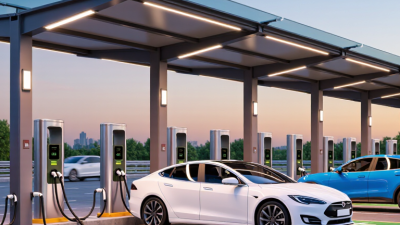
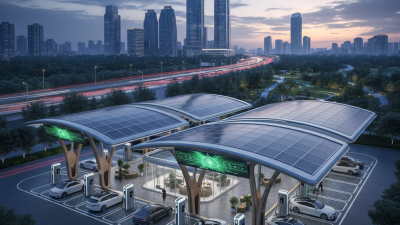
For public use, a DC fast-charging station can add substantial range during a short stop, depending on the car and battery conditions. A modular fast charger lets operators expand capacity as demand grows. A solar-canopy station pairs shaded parking with on-site generation, but sunlight alone may not cover every charging session. Battery-buffered stations store energy and can ease pressure on limited grid connections. They are not magic; storage capacity matters.
Curbside stations bring charging to streets where private driveways are scarce, with weather-resistant housings and accessible cable reach. Fleet-depot stations support multiple vehicles through load management and charging schedules, helping keep vehicles ready for planned routes.
The best choice depends on parking time, electrical capacity, and connector compatibility. A station’s advertised speed may not match the rate a vehicle can accept, so check both before installation. A tidy screen is nice; dependable service matters more.
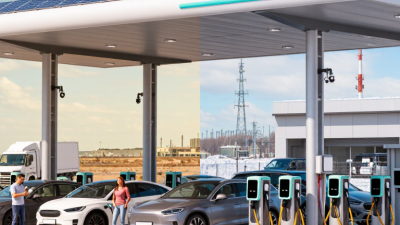
A useful top-ten shortlist should cover different journeys, not just the fastest chargers. Home and workplace AC stations suit long parking stops, while curbside units help drivers without private parking. Destination chargers work well near shops or hotels. Highway DC fast chargers matter most when minutes count. Speed varies widely.
Check the power rating, but also check what your vehicle can accept. A 150-kilowatt station will not make every car charge at that rate; battery temperature, state of charge, and the vehicle’s own limit all matter. Connector fit is essential, too. Confirm the plug type and whether a suitable adapter is approved for your vehicle. Small detail. Big inconvenience.
Network coverage and reliability can matter more than a headline speed. Look for recent availability data, clear pricing, and payment options that do not depend on one app. In practice, a charger listed as available may still be blocked or out of service. I would compare stations along the actual route, then keep a backup within a short drive. That planning is not perfect, especially in cold weather, when charging can slow more than expected.
| Rank | Charging station type | Typical rated output | Connector and vehicle compatibility | Network and access | Common use |
|---|---|---|---|---|---|
| 1 | 350 kW DC fast charger | Up to 350 kW; actual power varies with the vehicle and battery conditions. | Usually CCS1 or CCS2, depending on region. Best suited to vehicles with high-voltage batteries and high DC charging limits; compatible vehicles may charge below the station’s maximum. | Often part of a public DC fast-charging network; payment may be by app, contactless card, or roaming service. | Highway stops and rapid top-ups. |
| 2 | 250 kW DC fast charger | Up to 250 kW, subject to vehicle limits and charging conditions. | Commonly CCS1 or CCS2. Works with vehicles using the matching DC inlet; an adapter is useful only where the vehicle and charging equipment support it. | Generally network-operated public charging, with availability and payment options varying by location. | Travel corridors and busy public charging sites. |
| 3 | 150 kW DC fast charger | Typically rated up to 150 kW. | Usually CCS1 or CCS2. Many modern EVs support this class, although the vehicle’s peak rate may be lower. | Common in public fast-charging networks; some sites share power between dispensers. | A balance of charging speed and broad vehicle coverage. |
| 4 | 100 kW DC fast charger | Typically rated from about 50 to 100 kW, depending on the unit. | Often CCS1 or CCS2. Suitable for compatible EVs; older or lower-powered vehicles may draw less. | Found at public charging locations and some destination sites. | Public charging when the highest-power equipment is unavailable. |
| 5 | 50 kW DC fast charger | Commonly rated at 50 kW. | Often CCS1 or CCS2; some units also support CHAdeMO. The vehicle must have a compatible DC charging inlet. | Available through public networks and at some retail or service locations. | Mid-length stops and vehicles with moderate DC charging limits. |
| 6 | 50 kW CHAdeMO DC charger | Commonly rated at 50 kW. | For vehicles equipped with a CHAdeMO inlet. Availability on newer vehicles varies by market; it is not interchangeable with CCS without supported equipment. | Public-network availability varies by country and site. | Charging compatible older or regional EV models. |
| 7 | 24 kW CHAdeMO DC charger | Typically around 20–25 kW. | Compatible with EVs that have a CHAdeMO DC inlet; charging speed remains limited by the vehicle. | Less common than higher-powered DC equipment; local availability should be checked before travel. | Sites where lower-power DC charging is sufficient. |
| 8 | 22 kW three-phase AC charger | Up to 22 kW AC where the supply and vehicle support it. | Usually Type 2 in regions using that standard. The vehicle’s onboard AC charger determines the actual rate; many EVs accept less than 22 kW. | Common at public destinations and some workplaces in three-phase power regions. | Shopping, dining, and longer parking visits. |
| 9 | 11 kW three-phase AC charger | Typically up to 11 kW AC. | Often Type 2 in applicable markets. Requires a compatible inlet and an onboard charger that supports three-phase AC. | Widely used at homes, workplaces, and public parking facilities where three-phase supply is available. | Overnight charging or several hours of parking. |
| 10 | 7.2 kW single-phase AC charger | Typically around 7.2 kW, depending on supply voltage and current. | Connector varies by region, commonly Type 1 or Type 2. The car’s onboard AC charger sets the maximum accepted power. | Common for residential charging and available at some public parking locations. | Home charging and longer stays. |
Note: Ratings are equipment maximums, not guaranteed vehicle charging speeds. Actual power depends on connector compatibility, the vehicle’s charging limits, battery state and temperature, site power, and any power sharing between chargers. Connector standards and network access vary by region.
What Are the Top 10 Electric Vehicle Charging Stations?
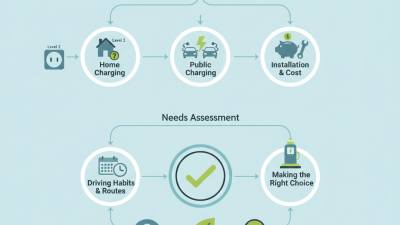
How to Choose a Station for Different Charging Needs
The best station depends on the trip, not just its maximum power. For overnight home charging, a Level 2 unit can replenish many vehicles while you sleep. The U.S. Department of Energy’s Alternative Fuels Data Center estimates Level 2 charging adds roughly 10–20 miles of range per hour; actual results vary by vehicle and conditions. For a quick highway stop, look for a compatible DC fast charger and check its power rating. Your car may not accept the station’s full output. A powerful sign does not guarantee a fast session.
For apartment residents, workplace charging, or errands, several reliable Level 2 ports may be more useful than one fast charger. Check connector compatibility, live availability, access hours, payment options, and nearby amenities before setting out. The International Energy Agency’s Global EV Outlook 2024 reports that public charging points grew by about 40% worldwide in 2023. More chargers are appearing, but coverage and uptime still differ by location. I would not plan a tight connection around a single station.
Tips: Match station speed to your stop. Check live status before arrival, and keep a backup nearby. Leave extra time in cold weather; charging can slow down. Real trips are messier than charts.