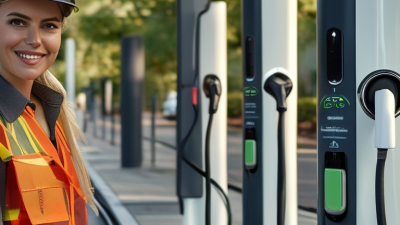
What Is the Top AC Slow Charging Type in 2026?
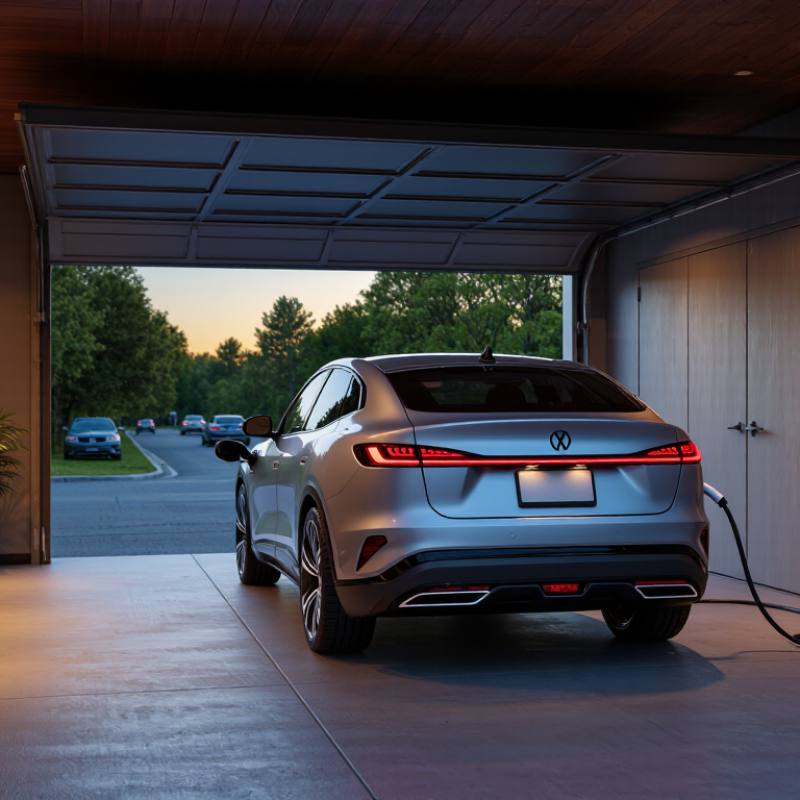
In 2026, the leading AC Slow Charging type is likely to remain home-based AC charging, especially Type 2 wallbox charging. It fits ordinary parking patterns: a vehicle arrives at 7 p.m., connects overnight, and leaves with a full battery. This is less dramatic than rapid charging. It is often more useful.
The International Energy Agency’s Global EV Outlook 2025 reported that worldwide electric car sales exceeded 17 million in 2024, representing more than one-fifth of new-car sales. More electric vehicles create stronger demand for dependable residential charging. The U.S. Department of Energy also identifies home charging as a major part of everyday EV use, while its Alternative Fuels Data Center distinguishes Level 1 and Level 2 charging by power, installation, and charging speed. These reports support a practical conclusion: AC charging wins when time is available and infrastructure costs matter.
EV charging analyst Tom Moloughney has repeatedly emphasized, “The vast majority of EV charging happens at home.” That observation remains highly relevant for this topic. However, the “top” AC Slow Charging type is not automatically the fastest wallbox. A 7.4 kW single-phase unit may suit apartments, compact cars, and limited electrical capacity. An 11 kW or 22 kW three-phase charger may suit larger homes, workplaces, or fleets. Local grids, vehicle onboard chargers, cable safety, and installation quality can change the answer. One limitation deserves attention: public charging data still varies between countries and reporting systems. Any 2026 ranking should therefore measure real usage, total cost, reliability, and user access—not power rating alone.
Definition of AC Slow Charging in 2026
In 2026, AC slow charging means supplying alternating current to an electric vehicle through a home, workplace, or public charger. The vehicle’s onboard charger converts that current into usable DC power for the battery. Unlike high-power DC charging, this process usually delivers energy gradually, often between 2.3 and 11 kilowatts. The exact rate depends on the vehicle, socket, charger, and local electrical supply.
It is a quiet, practical charging method. A typical 7.4-kilowatt unit may add roughly 40 to 60 kilometers of driving range during one hour, although battery size and weather change the result. Many drivers use it overnight. The cable may remain connected for several hours while the vehicle sits in a driveway or parking bay. Type 2 AC connections are widely used in many regions, but connector standards are not identical worldwide.
The “top” AC slow charging type is not universal. For daily home use, a properly installed 7.4-kilowatt AC charger often offers a useful balance between charging speed, installation demands, and battery-friendly operation. A lower-power socket can work, too. It simply needs more time.
The label is not perfectly consistent. Some sources call 11-kilowatt charging slow, while others classify it as moderate AC charging. Checking the vehicle’s onboard charger rating matters more than relying on marketing language. In real use, heat, cable quality, grid capacity, and an aging battery can reduce the displayed charging speed. A certified electrician should assess the circuit before installation.
How Type 2 AC Charging Works
What Is the Top AC Slow Charging Type in 2026?
Type 2 AC charging remains a practical choice for daily electric vehicle use. The connector follows IEC 62196-2, while IEC 61851-1 defines its charging communication. A control-pilot signal checks the connection, grounding, and available current before energy flows. Safe and deliberate.
The vehicle does not store AC directly. Its onboard charger converts incoming AC into DC for the battery. A home Type 2 unit often supplies 3.7 to 7.4 kW through a single-phase connection. Three-phase systems can reach 11 or 22 kW, where local electrical capacity allows it. A 60 kWh battery may need about eight hours at 7.4 kW, although conversion losses and charging limits extend the real time. The cable can feel warm, not hot, after several hours.
Industry data supports this everyday role. The International Energy Agency reported more than four million public charging points worldwide at the end of 2023, with total numbers rising about 40% that year in Global EV Outlook 2024. Most charging still happens where vehicles remain parked. That detail matters more than peak power. Type 2 charging is slower, but gentle overnight energy delivery can reduce installation pressure and suit routine driving. Real results vary. I have seen charging estimates fail when winter temperatures, shared circuits, or battery limits were ignored.
What Is the Top AC Slow Charging Type in 2026?
Type 2 AC charging is widely used for slow and destination charging. Its practical charging speed depends on the supply configuration and the vehicle’s onboard AC charger.
The values represent nominal AC output calculated from common European voltage and current configurations: 230 V single-phase and 400 V three-phase. Actual charging power may be lower because the vehicle’s onboard charger, electrical installation, and charging limits determine the final rate.
Why Type 2 Leads the 2026 AC Charging Market
What Is the Top AC Slow Charging Type in 2026?
Why Type 2 Leads the 2026 AC Charging Market
Type 2 remains the leading AC slow charging format in many 2026 electric vehicle markets. Its popularity comes from broad vehicle compatibility and practical everyday performance. The connector supports single-phase and three-phase charging, depending on the vehicle and installation. That flexibility helps homes, offices, apartments, and public parking facilities use one familiar connection.
It is convenient for overnight charging. A typical home setup can replenish a battery while the driver sleeps. In workplaces, several hours can add meaningful driving range without demanding rapid charging equipment. Type 2 also uses a secure locking connection and communicates with the vehicle before delivering power. This controlled process improves charging safety and reduces avoidable connection errors.
The market is not perfectly uniform. Regional standards and older vehicles still influence local choices. Some drivers may also expect faster charging than AC equipment can provide. That expectation can make Type 2 seem limited, especially during long trips. Yet slow charging suits parked vehicles better than many people initially realise. In my experience, the best setup depends on parking time, electrical capacity, and daily mileage. More power is not always better. A smaller installation may be cheaper, easier to maintain, and sufficient for routine travel. There is room for reconsideration here, because charging habits often matter more than headline charging speed.
AC Slow Charging Types Compared by Speed and Compatibility
What Is the Top AC Slow Charging Type in 2026?
AC slow charging is not one fixed method. It usually includes domestic socket charging, dedicated Level 1 charging, and Level 2 AC charging. Their real differences appear in charging speed, electrical demands, and vehicle compatibility.
A standard household socket often delivers about 1.4 to 2.3 kW. It suits overnight charging, small daily mileage, and occasional use. However, the cable and socket can become warm after several hours. A dedicated Level 1 circuit improves safety, but charging remains relatively slow. It may add only 8 to 15 kilometers of range per hour, depending on the vehicle.
Level 2 AC charging is usually the strongest choice for regular home use in 2026. Power commonly ranges from 3.6 to 22 kW, although many homes support less. A 7.4 kW unit can add roughly 35 to 50 kilometers of range hourly. Compatibility depends on the vehicle inlet, plug standard, phase supply, and onboard charger. Type 1 connections are common in some regions, while Type 2 connections support broader European and international use. Adapters may help, but they can reduce convenience and create another inspection point. The fastest rated charger is not always the best match. I once treated maximum output as the deciding factor, but household wiring often matters more. A lower-power unit may charge reliably every night, while a higher-rated unit remains underused.
How to Choose the Right AC Slow Charging Type
Type 2 AC charging is likely to remain the leading choice in many 2026 home and workplace installations. The International Energy Agency reported over four million public charging points worldwide at the end of 2023, with more than 1.7 million added that year. This growth shows that practical, lower-cost AC charging still matters.
Start with the vehicle’s onboard charger. A 7.4 kW single-phase connection suits many homes and can add roughly 40–60 kilometres of driving range overnight, depending on the vehicle. An 11 kW three-phase system may be better for apartments, offices, or higher daily mileage. A 22 kW unit sounds attractive, but many vehicles cannot accept that power through AC. Confirm the vehicle limit first.
Check the parking time, electrical capacity, cable length, and connector standard. Type 2 offers broad compatibility across many regions, while other AC standards remain common in specific markets. Installation quality also affects safety and reliability. The U.S. Department of Energy notes that Level 2 charging commonly operates around 7–19 kW, but real performance depends on wiring, temperature, and vehicle limits. That matters.
Do not choose by maximum power alone. A slower 3.6 kW charger may be enough for a vehicle parked beside a house overnight. Faster is not always better. Personal experience often reveals the missing detail: inconvenient cable placement can matter more than an extra few kilowatts. Recheck the local grid assessment before installation.
What Is the Top AC Slow Charging Type in 2026? - How to Choose the Right AC Slow Charging Type
Figures are typical electrical ranges. Actual charging speed depends on the vehicle's onboard AC charger, installation limits, battery temperature, state of charge, and local electrical regulations.
| AC charging type |
Typical supply |
Typical current |
Approx. AC output |
Added range per hour* |
Typical full-charge time** |
Best suited for |
2026 recommendation |
| Mode 2 portable AC charging |
100–120 V single-phase |
8–16 A |
0.9–1.9 kW |
About 4–8 km |
30–60 hours for a 60 kWh battery |
Emergency charging, occasional use, and locations without dedicated EV equipment |
Convenient backup, but usually too slow for daily high-mileage driving |
| Mode 2 portable AC charging |
220–240 V single-phase |
8–16 A |
1.8–3.7 kW |
About 8–18 km |
16–33 hours for a 60 kWh battery |
Overnight home charging where a fixed charging unit is not practical |
Suitable when daily driving is modest and installation cost must stay low |
| Mode 3 single-phase AC, 7.4 kW |
220–240 V single-phase |
Up to 32 A |
Up to 7.4 kW |
About 30–37 km |
8–10 hours for a 60 kWh battery |
Daily home charging, apartments, workplaces, and destination locations |
Top overall choice for most homes: a strong balance of speed, cost, efficiency, and installation simplicity |
| Mode 3 three-phase AC, 11 kW |
380–415 V three-phase |
About 16 A per phase |
Up to 11 kW |
About 45–55 km |
5–6 hours for a 60 kWh battery |
Homes and workplaces with three-phase electrical service |
Best upgrade where the vehicle supports 11 kW AC and three-phase supply is already available |
| Mode 3 three-phase AC, 22 kW |
380–415 V three-phase |
About 32 A per phase |
Up to 22 kW |
About 90–110 km |
2.5–3.5 hours for a 60 kWh battery |
Commercial sites, fleets, and vehicles equipped with a 22 kW onboard AC charger |
Fastest common AC option, but often unnecessary for home use because many vehicles accept less than 22 kW |
Practical selection guide:
Choose a 7.4 kW single-phase Mode 3 charger for most residential installations. Choose 11 kW or 22 kW three-phase AC only when the vehicle's onboard charger, the building's electrical service, and the intended charging schedule can all support the higher power.
* Range estimate: Based on approximately 15–20 kWh of usable energy per 100 km and rounded figures; real-world range varies by vehicle, weather, speed, and driving conditions.
** Charging-time estimate: Based on a 60 kWh battery and approximately 10–15% total charging losses; charging may slow near a high state of charge.