Why Are Charging Facilities Crucial for Global Supply Chains?
The emergence of electric vehicles (EVs) is transforming global supply chains. Charging Facilities play a crucial role in this transition. According to a report by the International Energy Agency, the number of EVs on the road surpassed 10 million in 2020. This growth underscores the need for robust charging infrastructure.
These facilities are essential for logistical efficiency and energy management. Research shows that supply chains with adequate charging stations report 20% lower downtime. Furthermore, companies investing in charging infrastructure see a 15% increase in operational efficiency. However, many regions still lack adequate facilities. This presents a significant challenge.
The reliance on traditional fuel sources remains problematic. The shift to electric power needs to be supported by widespread charging networks. Implementing these networks requires collaboration among governments and industries. Without action, supply chains risk falling behind in sustainability and efficiency. The need for reliable Charging Facilities is more urgent than ever.
The Role of Charging Facilities in Modern Global Supply Chains
Charging facilities play a pivotal role in modern global supply chains. As businesses increasingly rely on electric vehicles (EVs), the demand for charging infrastructure has surged. According to a report by the International Energy Agency, the number of public EV chargers globally rose to over 1.3 million in 2022, reflecting a growing recognition of their essential role. However, many regions still lack adequate charging stations, creating bottlenecks in logistics and distribution.
The efficiency of supply chains hinges on seamless transport networks. Charging facilities enable quick recharging, thus minimizing downtime. A study by McKinsey highlights that reducing charging times by just 15 minutes can increase fleet productivity significantly. Yet, the uneven development of charging infrastructure raises challenges. Some areas may experience long wait times or limited access, which can disrupt delivery schedules.
Moreover, while investments in charging infrastructure are increasing, inconsistencies in charging standards create confusion. This lack of uniformity complicates logistics planning. According to a recent report, 40% of supply chain professionals believe that standardized charging solutions would enhance operational efficiency. Addressing these challenges is crucial for achieving a more resilient and effective global supply chain network.
Impact of Electric Vehicles on Supply Chain Efficiency
Electric vehicles (EVs) are transforming global supply chains. Their impact on efficiency is profound. A recent report from the International Energy Agency (IEA) highlights that EVs can reduce logistics costs by up to 30%. This reduction primarily stems from lower fuel expenses. Still, the charging infrastructure remains a challenge for widespread adoption.
Supply chains heavily rely on proper charging facilities. A study by Deloitte indicates that regions with robust charging networks experience 25% better delivery times. Yet, only 20% of logistics firms have invested in EV charging capabilities. This shortfall could hinder the potential benefits of EVs in supply chains. Furthermore, the mismatch in charging station locations can lead to delays and increased costs.
However, the transition to EVs is not without hurdles. Many companies struggle with the initial investment in charging infrastructure. A well-planned strategy is essential, but many logistics businesses face uncertainty about future demand. The industry must address these challenges to fully leverage the benefits EVs offer. Balancing costs and efficiency is crucial in this evolving landscape.
Charging Facilities Impact on Supply Chain Efficiency
This chart illustrates the increasing integration of electric vehicles within global supply chains over the years 2020 to 2023. As charging facilities become more essential, the percentage of electric vehicles utilized in supply chain operations is projected to rise, enhancing overall efficiency.
Infrastructure Requirements for Charging Facilities in Logistics
Charging facilities play a pivotal role in modern logistics. As electric vehicles (EVs) become more prevalent, the demand for reliable charging infrastructure intensifies. Logistics companies face challenges in integrating these facilities into their operations. Understanding the unique infrastructure requirements is essential.
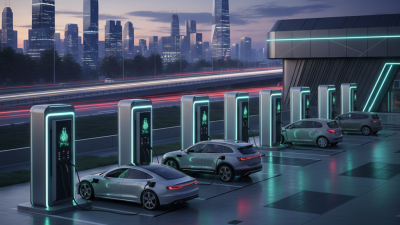
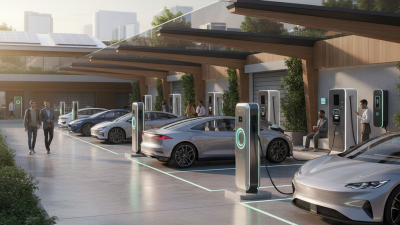
These facilities must be strategically located. They should be near major transport hubs and distribution centers. Fast-charging options are critical for reducing downtime. While some companies invest in their own stations, many rely on public infrastructure. This dependence can lead to bottlenecks, especially during peak periods. Predicting charging needs remains a significant hurdle.
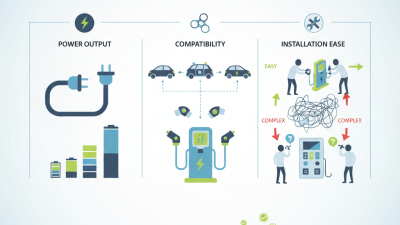
Another consideration is the compatibility of charging systems. Different EV models use various connectors and charging speeds. This variability can complicate usage. Real-time data about charging station availability can enhance operational efficiency. Yet, many companies struggle to implement these technologies effectively.
Evaluating current infrastructure and future needs is vital. There’s still much to learn in optimizing charging solutions within supply chains.
Challenges and Solutions in Developing Charging Networks
Charging facilities play a pivotal role in global supply chains. The transition to electric vehicles (EVs) is gaining momentum. However, creating robust charging networks presents significant challenges. According to industry reports, the global charging infrastructure market is projected to reach $140 billion by 2030. Yet, as of now, vendors still face issues with scalability and accessibility.
One major challenge is the uneven distribution of charging stations. Urban areas often have more facilities than rural ones. This disparity affects logistics efficiency. A well-known study highlights that about 47% of top logistics firms report charging station access as a key hurdle. This reveals a pressing need to address infrastructure gaps.
Tips: Businesses should invest in location analysis to identify underserved regions. Collaborating with local governments can enhance charging access. Moreover, employing mixed-use facilities can maximize resource utilization. Testing charging speed and reliability could further improve user experience. As the infrastructure grows, continuous assessments will ensure it meets demand effectively.
Why Are Charging Facilities Crucial for Global Supply Chains? - Challenges and Solutions in Developing Charging Networks
| Charging Facility Type |
Location Type |
Average Charging Time (hrs) |
Capacity (kW) |
Infrastructure Challenges |
Proposed Solutions |
| Fast Charger |
Highway Rest Areas |
0.5 |
100 |
Grid Capacity Issues |
Upgrade Grid Infrastructure |
| Ultra-Fast Charger |
Urban Retail Locations |
0.2 |
350 |
Space Constraints |
Multi-Use Charging Stations |
| Level 2 Charger |
Commercial Parking Lots |
2 |
7.2 |
Cost of Installation |
Government Subsidies |
| Home Charger |
Residential Areas |
6-12 |
3.7 |
Regulatory Hurdles |
Streamlined Permitting Process |
| Wireless Charger |
Fleets and Logistics |
Varies |
30 |
Technological Limitations |
Research and Development |
Future Trends: Evolution of Charging Technology in Supply Chains
The evolution of charging technology in supply chains is pivotal. As electric vehicles become dominant, efficient charging facilities are necessary. These facilities need to align with the growing demand for sustainable energy solutions. Innovative charging methods are emerging, aimed at reducing downtime. Fast-charging technologies are being developed to serve a wider range of vehicles. Many supply chains are still underprepared to accommodate this shift.
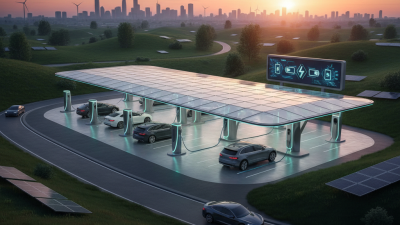
The integration of renewable energy sources into charging stations is another trend. Solar panels and wind turbines could power these facilities, minimizing reliance on traditional grids. This approach may serve both cost-effectiveness and sustainability. However, there are challenges. Infrastructure requirements pose a significant hurdle. Companies must rethink their energy management strategies. Old systems may not support new technologies, risking efficiency.
Data analytics can enhance charging station placement. Analyzing traffic patterns and vehicle usage enables optimal site selection. However, concerns about data privacy and security must be addressed. Often, stakeholders overlook these imperatives in the rush to innovate. Balancing technological advancement with security will be crucial for success. The path forward in this evolving landscape demands both reflection and proactive planning.