2026 How to Choose the Best Commercial Charging Stations for Your Business?
In today's rapidly evolving market, choosing the right Commercial Charging Stations is crucial for businesses looking to support electric vehicles. With an increasing number of consumers driving electric vehicles, the demand for reliable charging options grows. Selecting the best charging stations can enhance customer satisfaction and establish a forward-thinking brand image.
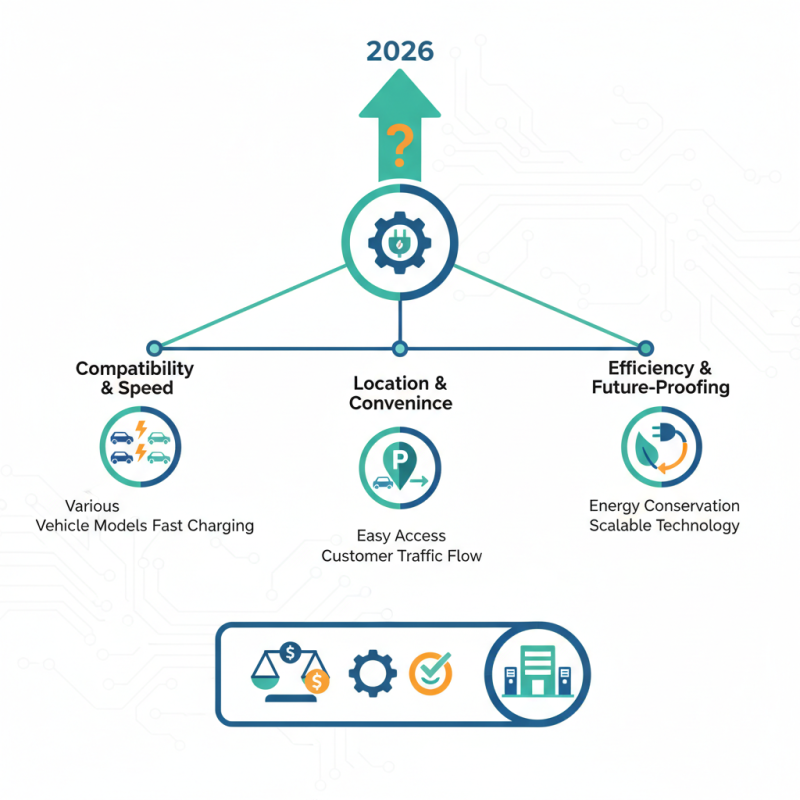
Evaluating various factors is essential when making this decision. Consider the station's compatibility with different vehicle models and charging speeds. The location of your charging stations should cater to customer convenience, ensuring easy access. Look into energy efficiency as well; it impacts both operating costs and environmental responsibility.
It’s easy to overlook these aspects in the selection process. A commercial charging station must not only serve your current needs but also adapt to the ongoing transitions in technology. Finding a balance between cost, functionality, and customer expectations can be challenging. Reflecting on these elements can lead to better long-term choices for your business.
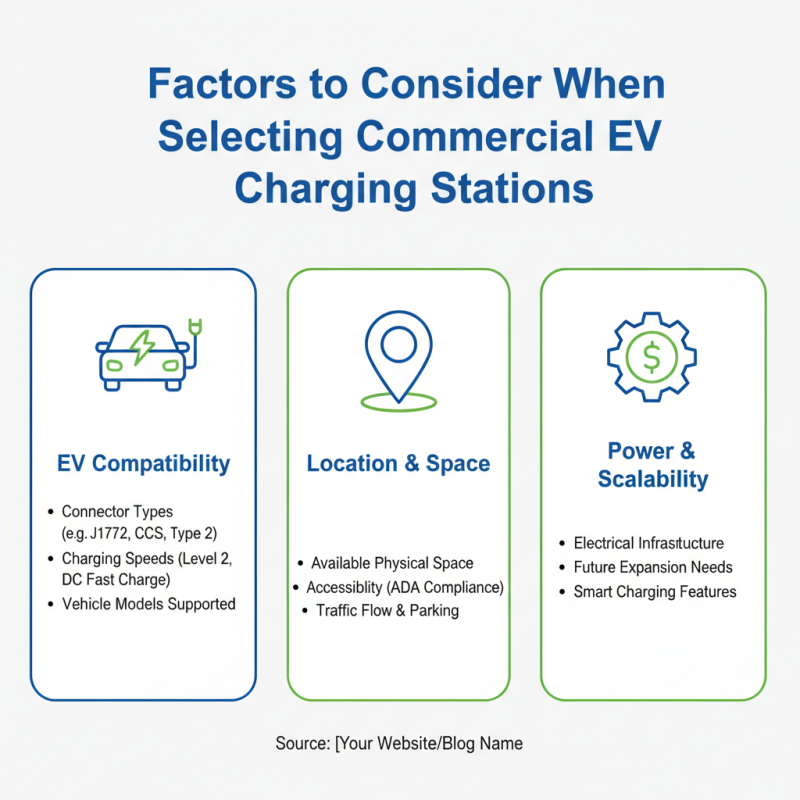
Factors to Consider When Selecting Commercial Charging Stations
Selecting the right commercial charging station for your business is crucial. Start by considering the types of electric vehicles (EVs) your customers use. Different vehicles may require different charging standards. Understanding these needs helps ensure you choose equipment that fits. Analyze the location of the charging stations as well. Is there ample space? Are the stations accessible for everyone?
Another key factor is the charging speed. Level 2 chargers are common for commercial settings, but some businesses need faster options. Think about how long customers will park their vehicles. This can determine whether you need fast chargers or more standard ones. It's also important to assess the power supply at your site. High-demand chargers may require upgrades or specific electrical configurations.
Cost is always a consideration. Budget for installation, maintenance, and potential upgrades. Review the warranty and customer service options available. While it's tempting to choose the cheapest option, consider the long-term benefits of reliability and support. Balancing these factors may feel overwhelming at times. However, thoughtful planning can lead to successful integrations of charging stations.
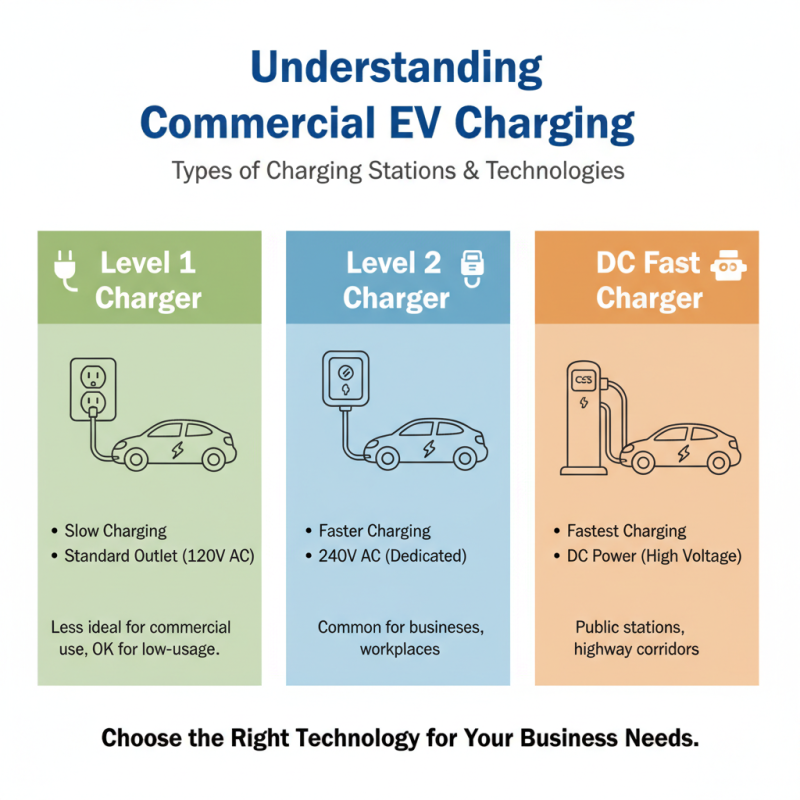
Understanding Different Types of Charging Stations and Their Technologies
When selecting commercial charging stations for your business, understanding types and technologies is crucial. The market offers Level 1, Level 2, and DC fast chargers. Level 1 chargers are basic options, offering slow charging rates. They require standard outlets, making them less ideal for commercial environments. However, they may suffice for low-usage scenarios.
Level 2 chargers are a much better fit for businesses. They provide faster charging and are versatile for different electric vehicle (EV) models. According to a recent report, approximately 80% of charging station installations are Level 2. This indicates a strong preference in commercial settings. Institutions and businesses often find these chargers balance cost and efficiency well.
DC fast chargers are ideal for high-traffic locations. They can recharge EVs in under an hour, making them attractive for businesses that prioritize speed. However, they also come with higher installation costs. A study by the International Energy Agency reveals that faster chargers can significantly increase customer footfall but require careful planning regarding site selection and grid capacity. Understanding these details can shape your decision-making process.
Evaluating the Cost-Effectiveness of Charging Stations for Businesses
When evaluating the cost-effectiveness of commercial charging stations, it's essential to consider various factors.
Initial installation costs can range between $2,000 to $70,000, depending on infrastructure needs.
Reports suggest that businesses can recoup these costs within three to five years through savings and increased customer traffic.
A study by the International Council on Clean Transportation reveals that 60% of electric vehicle owners will seek charging stations during their visits.
This percentage emphasizes the potential to attract new customers. However, businesses must also weigh ongoing maintenance and energy costs.
According to the U.S. Department of Energy, annual electricity costs for charging stations can amount to $1,200 to $4,200 depending on the number of vehicles charged.
Moreover, installation location holds significant weight in calculating profitability.
Stations in urban areas may see higher usage, while rural locations might struggle.
This dynamic highlights the need for careful site selection and market analysis. Inadequate research may lead to underutilized assets, resulting in financial strain.
Business owners should continuously assess the evolving electric vehicle landscape to ensure that their investments remain viable and effectively contribute to their goals.
Assessing Site Location and Power Requirements for Charging Infrastructure
When choosing commercial charging stations, site location is crucial. Analyze visible traffic flows, ensuring accessibility. Stations should be near main entrances or high-traffic areas. Consider nearby amenities as well. Customers may appreciate locations close to cafes or shopping areas. Visibility matters; signage can attract more users.
Power requirements are also essential. Assess your electrical infrastructure carefully. Determine if your site can handle multiple chargers simultaneously. Insufficient power can lead to user frustration and lost revenue. Load calculations should guide your choices. Collaborate with a qualified electrician to identify necessary upgrades. This step can minimize future headaches.
Potential issues can arise from overlooked details. For instance, inadequate space can hinder installation. Poor planning may lead to user bottlenecks. Anticipate changing needs; technology is evolving rapidly. Will your charging infrastructure stay relevant? Continuous evaluation is vital for sustained success. Consider feedback from users and adapt protocols accordingly.
2026 Commercial Charging Stations Power Requirements and Site Assessment
The Role of Incentives and Regulations in Choosing Charging Stations
When selecting commercial charging stations, understanding incentives and regulations is crucial. Governments frequently offer tax breaks or grants to promote electric vehicle infrastructure. These incentives can lower upfront costs significantly for businesses. However, it’s essential to research specific programs in your region. Not all incentives are created equal, and conditions may vary.
Regulatory requirements can also shape your decision. Local zoning laws may dictate the type and placement of charging stations. For instance, some areas require a minimum number of charging ports based on the business size. Non-compliance can lead to fines or delays in installation. Therefore, working with local authorities early in the planning stage is wise.
Factors like accessibility and compatibility should not be overlooked. Businesses must consider the needs of their customers. Ineffective placement may lead to congestion or underutilization. This reflection can help avoid future frustrations. Ensure your selected stations encourage usage and meet regulatory standards, maximizing benefits for your operation.
2026 How to Choose the Best Commercial Charging Stations for Your Business? - The Role of Incentives and Regulations in Choosing Charging Stations
| Charging Station Type |
Charging Speed (kW) |
Installation Cost ($) |
Eligible Incentives |
Regulations Impact |
| Level 2 AC |
6.6 - 19.2 |
1,000 - 5,000 |
Federal Tax Credit, State Rebates |
Zoning Laws, Utility Regulations |
| DC Fast Charging |
50 - 350 |
20,000 - 100,000 |
Grant Programs, Utility Incentives |
Building Codes, Network Standards |
| Level 1 AC |
1.4 - 2.4 |
500 - 2,000 |
Limited Local Rebates |
Minimal Regulations |
| Wireless Charging |
Varies |
10,000 - 50,000 |
Research and Development Credits |
Emerging Technology Standards |