Top 10 New Energy Vehicle Charging Stations You Need to Know?
The rise of New Energy Vehicles (NEVs) is changing the landscape of transportation. As governments push for lower emissions, the demand for New Energy Vehicle Charging Stations is skyrocketing. According to a report by the International Energy Agency, global electric vehicle sales reached a record 3 million units in 2020. This trend indicates a significant shift towards sustainable transportation.
However, with this rapid growth comes challenges. Inadequate charging infrastructure can deter potential buyers. A study published in the journal “Nature Sustainability” highlights that availability and accessibility of charging stations are key factors influencing consumer adoption. Many urban areas still lack sufficient stations, causing frustration among EV owners.
Innovation in charging technology is crucial for progress. Fast-charging stations are being developed, aiming to make charging as quick and convenient as refueling a gasoline vehicle. Yet, the disparity in station availability across regions necessitates urgent action. Understanding the top New Energy Vehicle Charging Stations can guide users in making informed decisions about their EV journeys. This knowledge is essential for a seamless transition to a more sustainable future.
Overview of New Energy Vehicle Charging Stations
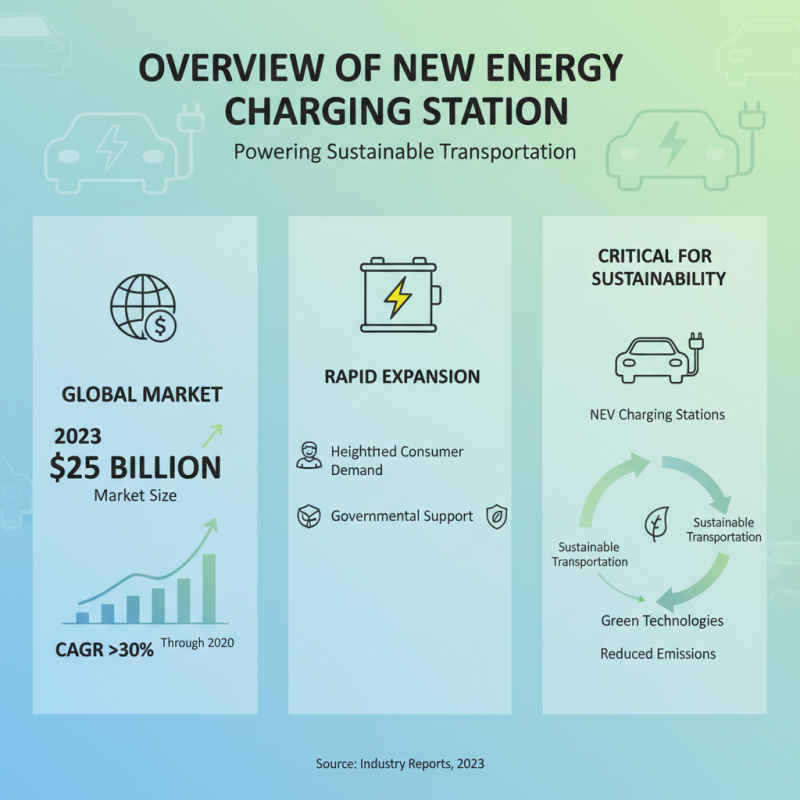
New energy vehicle (NEV) charging stations are critical for sustainable transportation. As of 2023, the global market for EV charging infrastructure has reached approximately $25 billion, with projections estimating it to grow at a compound annual growth rate (CAGR) of over 30% through 2030. This rapid expansion reflects heightened consumer demand and governmental support for green technologies.
These stations come in several types, including Level 1, Level 2, and DC fast chargers. Level 2 chargers are ubiquitous in residential and commercial areas. They offer a charging speed of about 20-25 miles of range per hour. In contrast, DC fast chargers provide an impressive 60-100 miles of range in just 30 minutes. This diversity in charging options caters to varying user needs, yet not all charging stations operate effectively. Investigations have shown that approximately 20% of stations were out of service, highlighting the necessity for consistent maintenance.
User access to charging stations is another concern. An estimated 50% of charging stations are located in urban areas, making them less available for rural drivers. This imbalance can lead to “charging deserts,” where users struggle to find available stations. Continued investments are required to ensure equitable access, reflecting the challenges that still exist. Effective deployment and management of these charging stations remain essential for enhancing the overall EV ownership experience.
Types of New Energy Vehicle Charging Stations
Electric vehicles (EVs) are becoming more common. Therefore, understanding the types of new energy vehicle charging stations is crucial. There are mainly three types: Level 1, Level 2, and DC fast chargers.
Level 1 chargers are the most basic. They use a standard outlet and are suitable for home charging. Charging might take a long time, often over 10 hours for a full charge. This type is ideal for overnight use or less frequent driving. Many users find it adequate for daily commutes but impractical for longer trips.
Level 2 chargers are faster. They provide a higher voltage and can charge an EV in about 4 to 6 hours. These are commonly found in public areas like shopping malls or offices. However, not all stations are well maintained. Sometimes users encounter broken units or long wait times.
Lastly, DC fast chargers are the quickest. They can charge a vehicle in about 30 minutes, but not all EVs can use them. Availability can be limited, especially in rural areas. Understanding these options helps drivers plan their trips effectively.
Key Features to Look for in Charging Stations
When considering new energy vehicle charging stations, certain features stand out. One crucial aspect is charging speed. Fast chargers can significantly reduce the time needed to power up your vehicle. Look for stations offering DC fast charging options, which can deliver a substantial charge in just 30 minutes.
Another essential feature is accessibility. Stations should be conveniently located near popular destinations, like shopping centers or public transport hubs. This makes it easier for drivers to charge while they shop or wait for their bus. Moreover, user-friendly interfaces are important. A well-designed app or screen can simplify the process of starting a charge.
Additionally, safety and durability should not be overlooked. Quality charging stations come with sturdy designs and safety features like surge protection. In terms of reliability, look for stations with excellent uptime rates. If charging stations frequently go offline, it can lead to frustrating experiences for users. Being aware of these aspects helps ensure you select reliable charging options for your electric vehicle.
Top 10 New Energy Vehicle Charging Stations Around the World
In the rapidly evolving world of new energy vehicles (NEVs), charging infrastructure plays a vital role. The International Energy Agency (IEA) reports that global electric vehicle sales reached 6.6 million in 2021. This surge emphasizes the need for efficient charging stations. Yet, despite growth in numbers, insufficient charging points remain a critical issue.
Cities like Shenzhen in China boast extensive charging networks, with over 10,000 stations installed. This exemplary model demonstrates how investment in infrastructure can support a burgeoning electric vehicle market. However, many regions still struggle with accessibility. A study from McKinsey highlights that 40% of potential EV buyers are deterred by charging concerns. Some areas feature long distances between charging points, which raises questions about feasibility.
Moreover, the technology behind these stations is improving. Fast-charging stations can recharge a vehicle in as little as 30 minutes, a game changer for urban dwellers. Yet, not all stations offer this capability, and it can lead to frustration for users. As the industry learns and adapts, it must address these gaps. The potential for a seamless charging experience is within reach, but continuous effort is necessary to meet rising demand.
Top 10 New Energy Vehicle Charging Stations Around the World
This chart represents the top 10 new energy vehicle charging stations based on the total number of charging points available. These stations are crucial for promoting electric vehicle adoption globally.
Future Trends in New Energy Vehicle Charging Infrastructure
The rapid growth of new energy vehicles (NEVs) drives significant changes in charging infrastructure. Currently, the global EV charging station market is projected to reach $50 billion by 2027, as reported by various industry analysts. A key trend is the transition to ultra-fast charging stations. With charging times reducing to 15 minutes, this shift boosts consumer confidence and convenience.
Moreover, smart charging technology is making waves. These systems optimize energy usage based on demand, reducing costs and reliance on the grid. By 2025, about 30% of all charging stations are expected to incorporate smart features. This number reflects the industry's effort to improve efficiency while promoting renewable energy consumption.
However, challenges remain. The uneven distribution of charging stations, particularly in rural areas, raises accessibility concerns. Users may face long wait times at popular locations. Additionally, standardization issues across different charging networks can lead to frustration. Addressing these shortcomings is vital for future growth and user satisfaction in the NEV charging landscape.