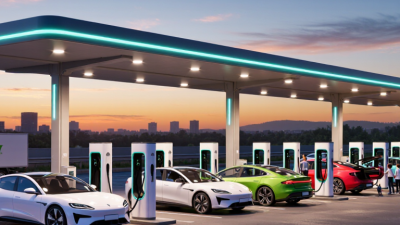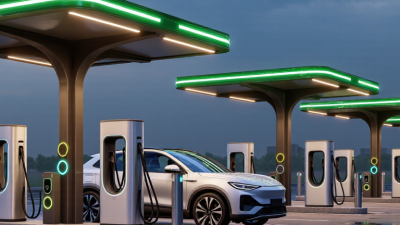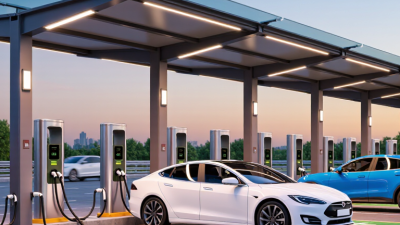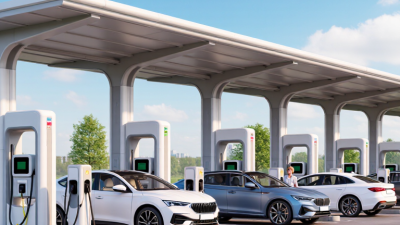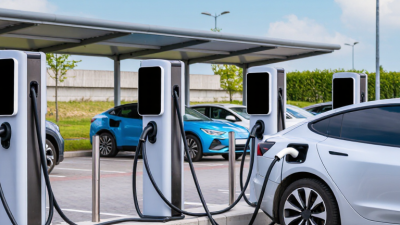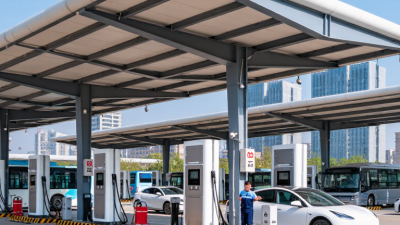
Commercial Charging Stations are becoming critical infrastructure as electric vehicles move beyond early adopters and into delivery fleets, taxis, buses, workplaces, and retail locations. The International Energy Agency reported in Global EV Outlook 2024 that global electric car sales approached 14 million in 2023, while public charging points increased by more than 40%. These figures show strong momentum, but they also reveal a practical challenge: demand is growing faster in some regions than grid capacity, site planning, and maintenance skills.
Performance matters more than appearance. A reliable commercial site needs suitable power capacity, clear payment options, durable connectors, remote monitoring, and accessible parking design. IEA data also shows that China holds the largest share of public charging infrastructure, while Europe and North America continue expanding through different funding and deployment models. Buyers should therefore avoid copying one market’s solution blindly. Local voltage, connector standards, weather, traffic patterns, and utility rules can change the investment result.
A larger charger count is not always better. This is easy to forget. The uptime, charging speed, service response, and total operating cost deserve equal attention. Reports from BloombergNEF and the National Renewable Energy Laboratory further emphasize the importance of coordinated charging, energy management, and fleet-focused infrastructure. For global buyers, the best Commercial Charging Stations in 2026 will not simply deliver high power. They will balance daily vehicle demand, future expansion, cybersecurity, safety, and measurable reliability. The market still has gaps. Some forecasts may look confident, yet real projects often face delayed grid connections, uneven utilization, and unexpected maintenance costs. Careful verification remains essential.
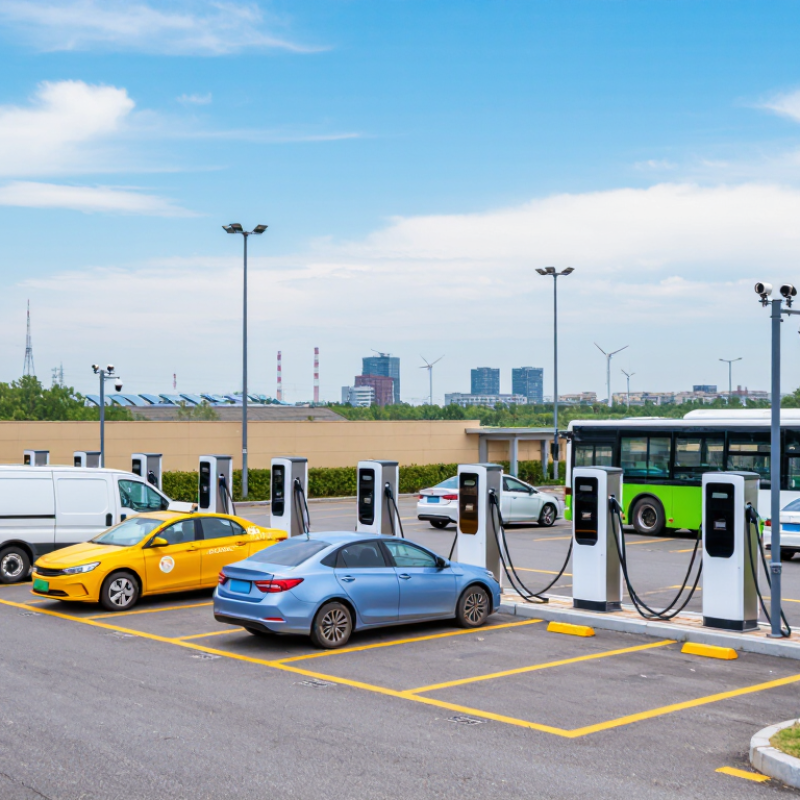
Commercial charging stations are fixed electrical systems designed for workplaces, retail sites, fleets, hotels, and public parking areas. They deliver controlled energy to electric vehicles through AC or DC charging equipment. Unlike a household outlet, a commercial unit usually includes protection devices, user authentication, payment support, and remote monitoring. It is infrastructure, not just a larger plug.
Here is how the process works. Grid electricity enters the site through a dedicated electrical panel. An AC charger sends power to the vehicle’s onboard converter, which changes AC into battery-ready DC. A DC fast charger performs that conversion inside the station, reducing charging time. Sensors constantly check voltage, temperature, current, and connection status. The system stops automatically when unsafe conditions appear. Small details matter.
A network platform can record energy use, charging duration, faults, and peak demand. Site operators may set power limits when several vehicles charge together. This load management can prevent expensive electrical upgrades, although poor configuration may create slower sessions. From practical installation work, cable reach, weather exposure, parking angles, and drainage often matter as much as rated power. A station with impressive output can still disappoint if drivers cannot connect comfortably. Buyers should verify local electrical requirements, connector compatibility, accessibility rules, maintenance response, and data security before selecting equipment. Real operating conditions are less tidy than product specifications.
Commercial EV charging stations now fall into several practical types. AC Level 2 units suit offices, hotels, apartments, and retail sites. They charge vehicles during longer stays, using moderate power and simpler electrical infrastructure. A driver can connect after breakfast and return before dinner. Their lower installation burden may improve site economics. However, charging speed depends on vehicle limits and local power supply. Many buyers underestimate this detail.
DC fast charging serves highways, taxi hubs, fleets, and busy urban parking areas. It can reduce charging time from hours to minutes. Output levels vary widely. Buyers should compare usable power, cable reach, cooling, and uptime. High-power DC systems require stronger grid connections and careful thermal management. A small depot may need several medium-power ports instead of one giant charger. That choice is less dramatic, but often more practical.
Depot chargers support buses, vans, and delivery vehicles with predictable routes. Load management can stagger charging after vehicles return, reducing unnecessary peak demand. Dual-port units can share power. Modular cabinets allow future expansion. Wireless charging may suit fixed routes, yet higher civil-work costs can weaken its value. Site surveys should check drainage, lighting, accessibility, cybersecurity, maintenance access, and local electrical requirements. Standards differ across markets. No design is perfect. I would leave room for revision, because fleet behavior rarely matches the first spreadsheet.
2026 Best Commercial Charging Stations for Global Buyers
Essential Features for Global Buyers to Compare
Commercial charging stations should match local voltage, grid capacity, and vehicle demand. A busy depot may need several high-power ports, while a hotel may value slower overnight charging. Buyers should compare output ranges, connector compatibility, and charging efficiency under real operating conditions. Marketing figures alone are not enough.
Safety certification, weather protection, and thermal management deserve close attention. Look for clear evidence of testing, ingress protection, emergency shutdown functions, and electrical fault detection. The enclosure should withstand rain, dust, heat, and repeated public use. In coastal areas, corrosion resistance can matter more than a higher charging speed.
Software also affects daily performance. A reliable platform should support user authentication, remote monitoring, payment integration, and detailed energy reports. Open communication protocols can simplify future upgrades and reduce dependence on one system. Check whether the interface supports local languages and currencies. Small details matter.
Installation requirements can change the total cost. Buyers should review cable length, foundation design, network access, maintenance response, and spare-part availability. A five-year warranty sounds useful, but its service conditions need careful reading. We have seen projects underestimate grid upgrades and winter heating needs. That mistake is easy to repeat. Pilot testing at one location may reveal noise, queueing, or software problems before a wider purchase.
A practical comparison of commercial electric-vehicle charging station categories, specifications, compliance requirements, and deployment considerations.
| Station Category | Typical Output | Typical Commercial Use | Common Regional Charging Interfaces | Electrical Input | Communication and Smart-Charging Features | Safety and Protection Features | Metering and Payment Requirements | Best Evaluation Priorities |
|---|---|---|---|---|---|---|---|---|
| Commercial AC Destination Charger | Typically 7.4–22 kW per connector; three-phase systems commonly support higher output than single-phase systems. | Offices, hotels, retail sites, apartment parking, workplaces, and long-dwell fleet parking. | IEC Type 2 in many European and other IEC markets; Type 1 in some single-phase markets; regional AC connector requirements must be verified. | Single-phase or three-phase AC; common commercial supplies include 230 V and 400 V class systems, subject to local utility rules. | Load balancing, scheduled charging, dynamic current control, OCPP 1.6J or OCPP 2.0.1 support, Ethernet, Wi-Fi, or cellular connectivity. | Residual-current protection, overcurrent and overvoltage protection, temperature monitoring, surge protection, protective earth monitoring, and enclosure protection. | Sub-metering or revenue-grade metering where billing is required; RFID, mobile application, QR-code, or contactless payment may be offered depending on jurisdiction. | Available parking time, installation cost, local grid limits, connector compatibility, network uptime, and serviceability. |
| Fleet AC Charging Hub | Usually 11–22 kW per charging point, with site-level power sharing across multiple outlets. | Delivery fleets, employee vehicles, municipal vehicles, rental fleets, and overnight depot charging. | Regional AC connectors such as Type 2 or Type 1; connector selection should match the fleet and destination markets. | Three-phase AC is generally preferred for multi-port commercial installations; transformer and switchgear capacity must be assessed. | Centralized energy management, vehicle scheduling, depot load management, user authorization, OCPP connectivity, and optional fleet-management integration. | Emergency stop provisions, locked cable management, residual-current monitoring, phase protection, fault logging, and controlled restart after power interruption. | Per-port energy records, driver or vehicle identification, tariff configuration, invoice export, and management of multiple user groups. | Fleet dwell schedules, number of vehicles, departure-time guarantees, energy-management capability, maintenance access, and total cost of ownership. |
| Compact DC Fast Charger | Approximately 24–60 kW per dispenser; suitable for moderate dwell times and limited-grid sites. | Urban parking, convenience retail, workshops, small fleets, roadside businesses, and mixed-use properties. | CCS1, CCS2, GB/T DC, or other legally accepted regional interfaces; the selected cable configuration should match local vehicle parc requirements. | Three-phase AC input with onboard AC-to-DC conversion; exact voltage and current depend on the model and local electrical code. | Remote monitoring, OCPP, automatic power sharing, charger diagnostics, firmware management, and optional integration with site energy systems. | Insulation monitoring, DC leakage protection, surge protection, cooling supervision, connector lock control, emergency stop, and controlled isolation. | Commercial energy meter, RFID, QR-code, mobile application, and contactless payment options where supported by local payment rules. | Power delivered at constrained sites, connector compatibility, conversion efficiency, thermal performance, payment reliability, and field-replaceable components. |
| Mid-Power DC Fast Charger | Typically 60–180 kW; some systems dynamically divide power between two or more vehicles. | Public charging, highway service areas, retail destinations, taxi fleets, and regional logistics operations. | CCS1 or CCS2 in many international markets, GB/T DC in China, and SAE J3400-compatible interfaces in applicable North American deployments. | High-capacity three-phase AC service; utility interconnection, transformer sizing, harmonics, and demand charges are key design factors. | OCPP 1.6J or 2.0.1, dynamic load management, remote reset, diagnostics, transaction data, roaming support, and optional ISO 15118 readiness. | DC insulation monitoring, overtemperature protection, output short-circuit protection, emergency stop, surge protection, cable temperature monitoring, and fault isolation. | Revenue-grade energy measurement may be required for public billing; support for card, contactless, RFID, QR-code, and app-based payment should be checked by market. | Peak-hour throughput, simultaneous charging performance, site power management, cooling design, uptime commitments, and spare-parts availability. |
| High-Power DC Charging System | Approximately 180–350 kW per charging position, depending on vehicle voltage, battery limits, and system configuration. | Highway corridors, intercity travel, electric buses, commercial vehicle stops, and high-volume public charging plazas. | High-power CCS1, CCS2, GB/T DC, or SAE J3400-compatible interfaces where legally and technically applicable. | Dedicated high-capacity electrical service is normally required; medium-voltage connection, transformer, switchgear, and civil works may be necessary. | Advanced power allocation, OCPP 2.0.1 readiness, remote operations, ISO 15118 capability, charging-session data, roaming, and energy-management integration. | Liquid- or enhanced-air-cooled cables where required, connector temperature sensing, insulation monitoring, emergency isolation, arc-fault considerations, and high-voltage interlock protection. | Accurate energy measurement, transparent tariff display, payment-card support where mandated, digital receipts, and transaction records suitable for audit. | Vehicle battery voltage compatibility, sustained output, queue management, transformer lead time, utility demand charges, cooling maintenance, and uptime. |
| Heavy-Duty Fleet Charging System | Commonly 150–600 kW for depot or corridor applications; charging power depends on vehicle type, duty cycle, and local infrastructure. | Electric trucks, buses, refuse vehicles, logistics depots, ports, warehouses, and scheduled commercial transport. | High-power regional DC interfaces; conductive charging, pantograph systems, or other heavy-vehicle interfaces may be selected according to fleet design. | Large three-phase service or medium-voltage infrastructure may be required, with detailed transformer, switchgear, protection, and civil engineering studies. | Fleet scheduling, route and energy planning, demand management, depot optimization, OCPP, ISO 15118 readiness, and integration with transport-management systems. | High-voltage isolation, insulation monitoring, thermal protection, emergency shutdown zones, cable management, impact protection, and controlled access. | Vehicle-level energy accounting, cost-center allocation, automated fleet reports, tariff support, and contract-based billing. | Route schedules, turnaround time, maximum vehicle power, site resilience, redundant charging capacity, maintenance response, and expansion capability. |
| Solar- and Storage-Integrated Charging Site | Charging output may range from 7.4 kW AC to more than 300 kW DC, with batteries used to reduce grid peaks or support limited connections. | Remote sites, commercial campuses, microgrids, retail locations, renewable-energy projects, and sites with expensive or constrained grid connections. | Regional AC or DC connectors selected according to local vehicle compatibility and charging demand. | Grid input combined with photovoltaic generation, battery storage, inverters, energy-management equipment, and optional backup generation. | Energy-management system integration, peak shaving, solar prioritization, export limitation, demand response, remote monitoring, and OCPP support. | Battery thermal management, DC and AC isolation, surge protection, fire-risk controls, emergency shutdown, inverter protection, and environmental monitoring. | Separate measurement of grid, solar, storage, and vehicle energy may be needed for accurate billing, incentives, and energy reporting. | Energy yield, battery capacity, grid-connection limit, lifecycle cost, weather exposure, storage degradation, fire compliance, and expansion planning. |
2026 Best Commercial Charging Stations for Global Buyers
Commercial charging decisions now depend on regional standards, not only output power. The International Energy Agency reported over four million public charging points worldwide in 2023. Europe commonly uses Type 2 and CCS2 connectors. North America follows SAE charging standards, while China mainly uses GB/T. Japan continues supporting CHAdeMO installations. A station designed for one market may create costly retrofit work elsewhere. Connector choice must match vehicle fleets, local grid rules, and payment requirements.
Installation begins with a site survey. Engineers should verify transformer capacity, cable routes, grounding, ventilation, drainage, and emergency access. IEC 61851 and IEC 60364-7-722 guide many international installations. North American projects often reference NEC Article 625. The European Union’s Alternative Fuels Infrastructure Regulation also introduces requirements for public access, payment, and charging coverage. The IEA expects global public charging demand to expand sharply before 2030. However, permitting delays and weak distribution networks remain practical barriers. High power is not always the best answer.
Tips: Request regional compliance certificates before ordering. Confirm metering accuracy and software compatibility. Test every connector under full load. Reserve space for future cabinets. Keep records of commissioning tests. A small mistake can become a long outage. Field planning is imperfect, and local inspection feedback may change the design. That is normal. Good suppliers should provide installation drawings, protection settings, maintenance intervals, and clear evidence from recognized testing laboratories.
Regional reference power levels, installation planning, and compliance requirements
Type 2 and CCS2 are widely used. Commercial AC charging commonly reaches 22 kW, while high-power DC systems may reach approximately 350 kW. Public installations should consider IEC 61851, IEC 62196 and AFIR requirements.
J1772 AC equipment commonly supports up to 19.2 kW at Level 2. Commercial DC systems may reach approximately 350 kW. Projects should evaluate NEC Article 625, applicable electrical permits and product safety certification requirements.
GB/T connectors and communication protocols are widely used. Commercial AC systems commonly operate around 22 kW, while representative DC systems may reach approximately 250 kW. GB/T 18487.1, GB/T 20234 and local grid requirements should be reviewed.
The chart shows representative upper-end commercial reference ratings, not mandatory regional limits. Actual output depends on the charger model, vehicle capability, grid connection, transformer capacity, cable sizing, protection devices, local permits and site operating conditions.
How to Select the Best Commercial Charging Station in 2026
Commercial charging decisions now require more than comparing charging speeds. The International Energy Agency reported over 14 million electric cars sold worldwide in 2023. It also recorded more than four million public charging points globally. This growth increases pressure on busy retail sites, workplaces, hotels, and fleet depots.
Start with the site, not the brochure. A 150 kW charger may look impressive, but limited grid capacity can create expensive delays. Check transformer capacity, parking turnover, cable reach, and local weather conditions. Select hardware with recognized safety certification, remote diagnostics, dynamic load management, and open communication protocols. Interoperability matters when payment systems or software platforms change. It is not always perfect.
Tips: Measure vehicle dwell time before choosing power. A supermarket may need reliable 60 kW charging, while a logistics depot may require multiple high-power units. Request uptime records, service response times, spare-parts policies, and warranty terms. The uptime target should be written into the contract. The U.S. National Renewable Energy Laboratory highlights charging reliability, accessibility, and user experience as important deployment considerations. Also review the IEA Global EV Outlook 2024 before planning expansion. Data can age quickly. Recheck local electricity tariffs and connection timelines in 2026.