10 Best Charging Pile Industries for Global Buyers

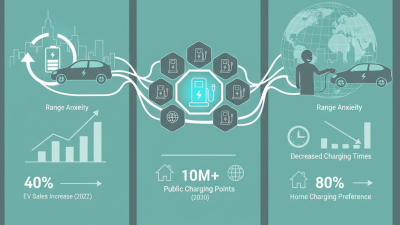
Charging Pile Industries are moving from a supporting utility into essential global infrastructure. Electric vehicles now depend on reliable charging networks, not merely attractive vehicle prices. The International Energy Agency’s Global EV Outlook 2024 reported more than 14 million electric cars sold worldwide in 2023. It also recorded nearly four million public charging points globally. Over 1.3 million public chargers were added during that year.

The market is expanding quickly.

However, growth creates difficult buying decisions. A charging pile may offer 240 kilowatts on paper, yet deliver less power during heat, congestion, or poor grid conditions. Global buyers must examine uptime, connector compatibility, cybersecurity, maintenance coverage, payment systems, and total ownership costs. These details matter beside a warehouse entrance, a highway rest area, or a crowded apartment garage.

Claas Bracklo, a former CharIN leadership figure and e-mobility standards expert, has emphasized, “Interoperability is the key to the success of e-mobility.” That principle remains practical. Chargers must communicate smoothly with vehicles, platforms, and energy systems across borders.

This guide evaluates 10 Best Charging Pile Industries for Global Buyers through technical performance, manufacturing capability, certifications, service reach, and deployment experience. It considers research from the IEA, BloombergNEF, and regional transport agencies. Still, no ranking is flawless. Prices change. Standards evolve. Local grid limitations can overturn a seemingly perfect choice. Buyers should treat this list as a disciplined starting point, not a final purchasing decision.
10 Best Charging Pile Industries for Global Buyers

Charging Pile Industry Overview and Global Market Scope

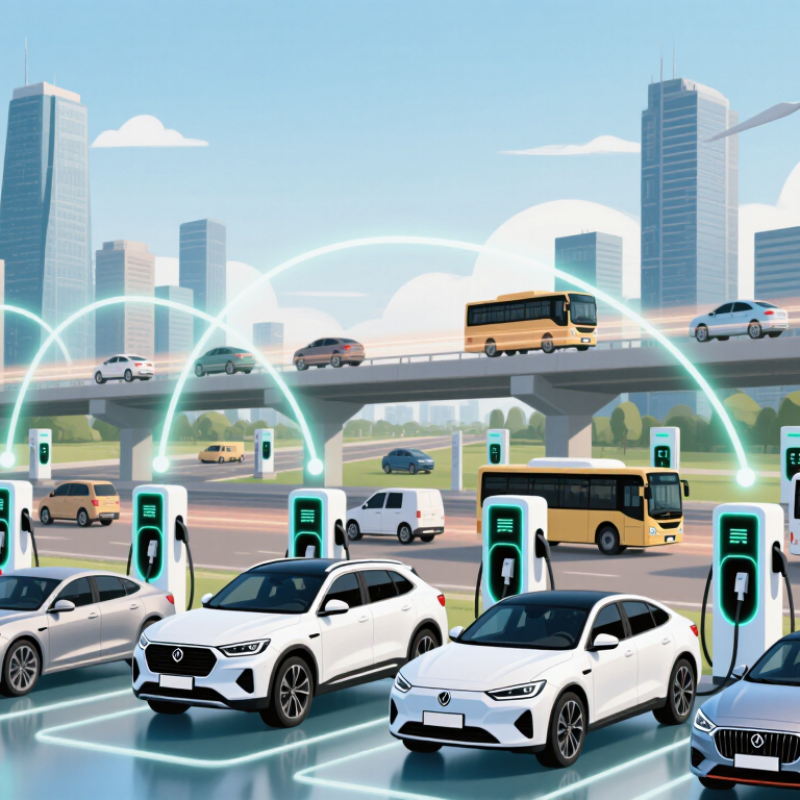
Charging pile markets are expanding beyond private garages. Global buyers now assess ten major application industries: passenger vehicles, electric buses, logistics fleets, taxis, workplaces, shopping centers, hotels, residential buildings, public parking, and energy services. Each sector requires a different balance of charging speed, uptime, space, and operating cost.

Public charging favors durable hardware, clear payment systems, and remote monitoring. Fleet operators usually need scheduled charging, load management, and accurate energy records.

Residential projects often prioritize compact design, safety controls, and simple installation. In hotels and retail locations, charging can support longer customer visits. Utility-linked projects may add renewable energy, storage, or demand-response functions.

Market scope varies by region. Dense cities often need high-power stations, while developing corridors may require reliable medium-speed equipment. Climate, grid capacity, connector standards, and maintenance access can change the business case. Experienced buyers should inspect enclosure quality, software compatibility, warranty terms, and local service capability. A low purchase price can become expensive when spare parts arrive slowly.

The industry is promising, but growth is not automatic. Some forecasts assume smooth grid expansion. That assumption can fail. Site approvals, uneven utilization, and uncertain electricity prices still affect returns. Buyers should test a small deployment first, measure real charging sessions, and revise forecasts from field data. Numbers on paper are not enough.

Key Types of Charging Piles and Their Applications

10 Best Charging Pile Industries for Global Buyers

Charging piles differ by output, installation needs, and vehicle usage. AC home chargers usually deliver 3.7–22 kW. They suit overnight parking, apartments, offices, and small hotels. A vehicle may gain 40–80 kilometers of range during several hours.

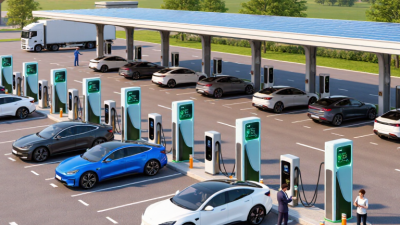
DC fast chargers commonly provide 30–180 kW. They fit highway stops, taxi stations, shopping centers, and fleet depots. Higher-power systems can reduce waiting time, but they require stronger grid connections, careful cooling, and wider maintenance access. Ultra-fast piles above 250 kW serve busy transport corridors. They are powerful, but not always economical for low-traffic locations. Portable charging units support emergencies and temporary construction sites. Their output is lower. Still, flexibility matters.

Tips: Match the pile to parking time, daily mileage, and local electrical capacity. Check connector compatibility, weather protection, cable length, payment options, and remote fault alerts. For logistics fleets, compare charging schedules with loading hours. For public sites, leave space around the cabinet for safe inspection.

Experience shows that a technically impressive charger can perform poorly when placed beside a weak transformer. This is an easy mistake. Buyers should request test records, efficiency data, warranty terms, and spare-parts support. Standards and grid requirements also vary between markets. A careful site survey should happen before purchase, although some projects still underestimate civil work costs.

Ten Leading Charging Pile Industries for Global Buyers

Ten Leading Charging Pile Industries for Global Buyers

Global buyers should evaluate ten connected charging pile industries, not only hardware prices. They include home AC charging, workplace charging, public destination charging, highway DC fast charging, bus depots, truck depots, fleet charging software, battery swapping, solar-integrated charging, and energy-storage charging. The International Energy Agency reported that global public charging points exceeded four million in 2023. More than 1.7 million public points were added that year. This growth increases demand for reliable connectors, payment systems, load management, and weather-resistant enclosures.

Each segment serves a different operating pattern. Home units may need simple installation and night-time scheduling. Highway chargers require high uptime, cooling systems, and clear maintenance access. Depot systems must coordinate dozens of vehicles during short parking windows.

The IEA’s Global EV Outlook 2024 indicates that public charging capacity must expand sharply before 2035 to support electric mobility targets. That creates opportunities for power distributors, construction contractors, software developers, and service technicians. The categories overlap. That is the difficult part.

A low-cost pile can become an expensive idle asset when grid capacity, spare parts, or local standards are ignored. Buyers should verify certification, charging compatibility, cybersecurity controls, warranty response times, and independent field-test records before signing contracts. Data sheets look clean. Real sites are not.

Standards, Features, and Performance Factors to Compare

10 Best Charging Pile Industries for Global Buyers

Standards, Features, and Performance Factors to Compare

Global buyers should compare standards before comparing prices. IEC 61851 defines charging control, while IEC 62196 covers plugs and sockets. ISO 15118 supports vehicle communication, smart charging, and possible plug-and-charge functions. Compatibility still varies between markets. The IEA Global EV Outlook 2024 reports more than four million public charging points worldwide at the end of 2023, with growth above 40% that year. Rapid expansion makes standard selection less forgiving.

Power ratings need practical testing. A 240 kW charger may deliver less during heat, grid limits, or shared use. Ask for output curves, conversion efficiency, operating temperature, and cable cooling details. Check protection ratings, emergency stops, surge protection, and maintenance access. Software matters too. Open communication protocols can support remote monitoring, payment systems, load balancing, and firmware updates. A screen that looks impressive cannot repair weak backend data.

Reliability needs measurable evidence. Use the 97% annual uptime benchmark applied in major public-charging infrastructure programs, then request independent service records. Compare mean time between failures, repair response, spare-part availability, and warranty exclusions. The IEA notes that public charging demand will rise sharply with electric vehicle adoption, but grid capacity may become a constraint. That risk is easy to underestimate. Some supplier claims remain difficult to verify, especially when testing conditions are unclear. Buyers should request third-party reports, local pilot results, and a complete cost model covering electricity, software, labor, and replacement parts.

10 Best Charging Pile Industries for Global Buyers — Standards, Features, and Performance Factors to Compare

Typical rated output by charging application. Values represent common market configurations rather than a specific manufacturer or brand.

Higher power can reduce charging time, but buyers should also compare grid capacity, connector standards, thermal management, uptime, payment integration, safety certification, and interoperability. Common reference frameworks include IEC 61851 for conductive charging, ISO 15118 for vehicle-to-charger communication, OCPP for backend connectivity, and regional connector systems such as CCS, GB/T, and CHAdeMO.

Supplier Selection, Certification, Pricing, and Procurement Considerations

For global buyers, charging-pile selection starts with site reality, not catalogue power. The IEA’s Global EV Outlook 2024 reported more than four million public charging points worldwide at the end of 2023. It also recorded over 1.3 million additions that year. This growth expands supplier choice, but it exposes uneven installation quality. Ask for load studies, thermal test records, uptime definitions, and service response times. A 240-kilowatt cabinet is useless if the local transformer cannot support it. Small details matter.

Require evidence aligned with IEC 61851 and IEC 62196, alongside market-specific electrical and cybersecurity requirements. For connected equipment, request EMC reports, ingress protection tests, software-update procedures, and traceable serial-number records. ISO 15118 readiness may support future vehicle-to-grid functions, but “ready” needs a written scope. Independent laboratory reports are stronger than supplier declarations alone. Certification paperwork can still hide gaps.

Pricing must include hardware, freight, tariffs, commissioning, payment terms, spare modules, warranty, and five-year maintenance. The IEA notes that public charging costs vary widely by charger type, location, and grid connection. Civil works may exceed the charger’s invoice value. Compare lifetime cost per delivered kilowatt-hour, not only the purchase quote. Require sample production units, factory acceptance testing, and a repair-part list before signing. A low offer may be attractive. It may also reflect missing software support, weak cooling design, or unrealistic uptime assumptions. No scorecard is perfect. Recheck it after a real site visit.

10 Best Charging Pile Industries for Global Buyers - Supplier Selection, Certification, Pricing, and Procurement Considerations

No. Charging-Pile Industry / Application Typical Charging Configuration Typical Power Range Indicative Hardware Price* Relevant Standards and Certifications Supplier Selection Priorities Key Procurement Considerations
1 Residential Home Charging Single-port AC wall-mounted charger 3.7–22 kW AC Approximately US$400–US$2,500 per unit IEC 61851, IEC 62196, CE or applicable national approval; IP54 or higher; RCD protection; optional Wi-Fi, Ethernet, or OCPP Electrical safety, compact design, load balancing, mobile connectivity, warranty support Confirm household voltage, connector type, cable length, residual-current protection, installation method, and local grid limits
2 Workplace and Office Parking Networked AC chargers with user authentication and energy management 7–22 kW AC Approximately US$700–US$3,500 per unit IEC 61851, IEC 62196, OCPP 1.6J or OCPP 2.0.1, CE/UKCA/UL as required, EMC compliance, IP54 or higher Backend interoperability, RFID or app access, dynamic load management, user billing, remote diagnostics Evaluate parking duration, peak-load restrictions, network fees, employee access rules, software costs, and data ownership
3 Retail, Shopping Centers, and Supermarkets Mixed AC and DC charging for short and medium parking stays 22 kW AC; 30–180 kW DC Approximately US$1,500–US$60,000 per charger IEC 61851, IEC 62196, OCPP, IEC 60364 installation requirements, EMC and electrical-safety certification, optional MID-compliant metering High availability, payment integration, weather resistance, clear user interface, service response time Check transformer capacity, parking turnover, payment regulations, civil works, signage, revenue sharing, and maintenance access
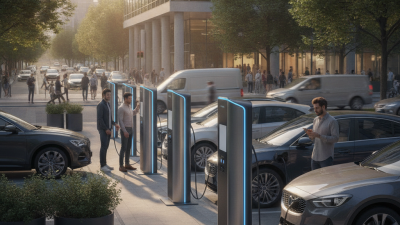
4 Public Curbside and Municipal Charging Pedestal or curbside AC chargers with public access control 7–22 kW AC Approximately US$1,500–US$6,000 per unit IEC 61851, IEC 62196, OCPP, local electrical and accessibility regulations, IP54 or higher, IK10 where required Vandal resistance, accessibility, remote monitoring, public-payment compatibility, long-term spare-parts availability Obtain permits, verify underground utilities, plan traffic protection, define uptime requirements, and include civil works in the total budget
5 Hotels, Resorts, and Destination Charging AC destination charging, often combined with a small number of DC units 7–22 kW AC; optional 30–60 kW DC Approximately US$700–US$25,000 per charger IEC 61851, IEC 62196, OCPP where networked, CE/UKCA/UL or local equivalent, IP54 or higher Guest-friendly operation, reservation capability, branding-neutral interface, low noise, property-management integration Assess guest parking duration, amenity pricing, installation near buildings, cable management, and responsibility for electricity costs
6 Commercial Fleet and Delivery Depots Centralized AC or DC charging with fleet-energy management 11–22 kW AC; 60–180 kW DC Approximately US$1,500–US$60,000 per charger IEC 61851, IEC 62196, OCPP 1.6J/2.0.1, ISO 15118 where plug-and-charge is needed, electrical and EMC certification Fleet scheduling, reliable uptime, power sharing, telemetry integration, remote service, modular replacement Match charger output to route schedules, battery capacity, dwell time, depot transformer limits, and total cost of ownership
7 Bus and Municipal Transit Depots High-power depot chargers, pantograph systems, or overnight plug-in chargers 60–450 kW DC Approximately US$25,000–US$150,000 per charger IEC 61851, IEC 62196 where applicable, ISO 15118 where supported, EMC and grid-connection requirements, local transit specifications Operational reliability, automated connection, rugged construction, depot energy management, safety interlocks Use route and timetable simulations, assess structural works, harmonics, redundancy, emergency procedures, and driver training
8 Highway and Intercity Fast-Charging Hubs Multi-port DC fast chargers with high simultaneous-load capability 120–360 kW DC per charger Approximately US$35,000–US$120,000 per charger IEC 61851, IEC 62196, OCPP 2.0.1 preferred for advanced management, ISO 15118 where required, CE/UKCA/UL or local equivalent High uptime, power sharing, liquid-cooled cable options, payment systems, remote monitoring, service network Budget for medium-voltage connection, transformer, demand charges, battery storage, canopy, drainage, lighting, and 24-hour support
9 Electric Truck and Logistics Charging High-power DC depot or corridor charging for heavy-duty vehicles 180–600 kW DC; higher-power systems are emerging Approximately US$60,000–US$250,000 per charging position IEC 61851, applicable IEC 62196 requirements, ISO 15118 where supported, relevant heavy-duty charging-interface specifications, EMC and grid standards High continuous output, cable ergonomics, thermal management, vehicle-route compatibility, scalable site architecture Validate axle clearance, turning radius, charging dwell time, electrical demand, connection standards, and future vehicle compatibility
10 Renewable-Energy and Battery-Integrated Charging Sites AC or DC chargers integrated with solar generation, battery storage, and energy-management controls 22–180 kW charging output, depending on system design Approximately US$20,000–US$180,000 per integrated site, excluding major civil works IEC 61851, IEC 62196, OCPP, ISO 15118 where required, inverter and battery-storage safety standards, local grid-interconnection certification Energy-management interoperability, peak shaving, islanding protection, battery safety, monitoring, and upgradeability Compare energy tariffs, solar yield, battery degradation, export limits, fire protection, warranties, and lifecycle operating costs
Pricing note: The hardware prices are indicative international procurement ranges in U.S. dollars and generally exclude shipping, taxes, installation, civil works, grid upgrades, software subscriptions, payment processing, and commissioning. Actual quotations vary by power rating, connector configuration, order quantity, certification market, enclosure rating, communications, and warranty terms.
Procurement checklist: Request certification copies, test reports, datasheets, OCPP conformance details, cybersecurity documentation, ingress and impact ratings, factory quality records, spare-parts commitments, warranty conditions, delivery schedule, installation manuals, and references for comparable climates and duty cycles.